


If you're buying your first Airbnb rental, you're not just buying a house. You're choosing where to run a short-term rental (STR) business.
That sounds obvious, but most first-timers still pick a market the way they'd pick a vacation spot: vibes, a "top 10" listicle, a friend's success story, or one flashy weekend event. Markets don't pay you back for enthusiasm. They pay you back for fit.
This guide covers the 12 most common market-selection mistakes we see at Chalet, why they quietly destroy returns (even when you buy a "good" property), and exactly how to avoid each one. We also include a scorecard you can use to pressure-test any city in about 30 minutes and a repeatable 5-step process for narrowing your search.
Whether you're analyzing your first set of cities or doing a 1031 exchange into short-term rentals, this is the playbook you'll want bookmarked.

What STR Market Selection Actually Controls
Before getting into the mistakes, it helps to zoom out. A short-term rental's performance is really a four-variable machine:
How many nights you sell (occupancy)
How much you earn per sold night (average daily rate, or ADR)
How much it costs to operate (fixed + variable expenses)
How much it costs to finance (your monthly debt payment)
The market you choose controls all four of these variables, even before you pick a specific address. A city with weak demand drives down occupancy. A market with rising supply erodes your pricing power. A region with unstable insurance markets inflates your expenses. And a high-priced metro where properties don't cash-flow makes financing a nightmare.
So when we talk about "choosing a market," we're really talking about choosing the operating environment for your business. Get that wrong, and even a beautifully renovated property with five-star reviews will underperform. If you're new to this, Chalet's guide to investing in your first Airbnb rental walks through the full decision process from scratch.
The 3 STR Metrics That Matter More Than Annual Revenue
Most beginners fixate on "annual revenue." Revenue isn't wrong, but it's incomplete. You need to understand the three ingredients behind it.
Occupancy (%) is your nights booked divided by nights available. It tells you how consistently your property earns. You can explore average Airbnb occupancy rates by city to benchmark what's realistic in your target market.
Average Daily Rate (ADR) is total revenue divided by nights sold. It tells you how much you earn per booked night.
RevPAR (Revenue Per Available Room) combines the two: occupancy multiplied by ADR. This is the efficiency metric that lets you compare markets on equal footing.
Why this matters: A market can have a sky-high ADR but terrible occupancy (big peaks, painful valleys). Another market can have a lower ADR but steady bookings (boring, but bankable). First-timers almost always gravitate toward the flashy ADR number and then wonder why cash flow feels like a rollercoaster.

Understanding these three numbers sets the foundation for everything that follows. If your market doesn't deliver a healthy RevPAR, no amount of interior design or dynamic pricing will save the deal. See top factors affecting Airbnb profitability for a deeper breakdown of what drives performance in different markets.
12 STR Market Mistakes That Kill Investment Returns
Mistake 1: Picking "Hot" Markets Before Checking Your Own Constraints
What it looks like: You pick 3 "hot" cities from a listicle, then try to force the numbers to work.
Why it fails: A market is only "top" for a specific buyer profile. A fly-to luxury market might crush it for a high-cash buyer with a great property manager, and be a total disaster for a first-timer who needs DSCR financing and can't stomach seasonality.
The fix: Start by writing your constraints before you ever look at data. Ask yourself:
How many hours away can you be and still sleep at night?
Do you need year-round demand, or can you tolerate a seasonal winter?
Can you legally run a whole-home STR in that market, or are you okay with home-sharing rules?
What's your maximum "all-in" monthly burn (mortgage + utilities + baseline expenses)?
Once you've got that list, filter markets through it. Not the other way around.
Chalet makes this step easier with free market dashboards that let you compare cities side-by-side on real performance data, so you're not guessing. If you've never invested before, our guide to buying an Airbnb with no experience is a helpful starting point.

Mistake 2: Analyzing a City Instead of Its Neighborhoods and Demand Nodes
What it looks like: You underwrite "Austin" or "the Smokies" as one thing.
Why it fails: Guests don't book "a city." They book a location relative to demand drivers: walkable districts, ski lifts, hospitals, stadiums, beaches, trailheads, wedding venues, theme parks. Two neighborhoods 15 minutes apart can have totally different occupancy, ADR, and guest mix. Your property's micro-location is usually a bigger lever than the city name on a map.
The fix: Before you shortlist a market, identify the top 2 to 4 demand nodes and the property types that win there (cabins vs. condos, 2BR vs. 4BR, pet-friendly or not, parking, hot tub, and so on).
Use Chalet's market analytics to see what performs at the neighborhood level, then stress-test a specific address with the ROI and DSCR calculator. For state-specific breakdowns, explore resources like best Airbnb markets to invest in the US to see how different regions compare on a consistent framework.
Mistake 3: Overlooking Supply Growth When Evaluating STR Markets
What it looks like: You see strong historical revenue and assume it'll persist.
Why it fails: Short-term rentals are competitive. When supply increases faster than demand, occupancy and pricing power get squeezed. A 2025 industry outlook via Business Wire projected demand growth of roughly 4.9% against supply growth of 4.7%, with only modest RevPAR improvement. That's a signal the market is reaching a more balanced, and more competitive, phase.
The fix: Add one metric to every market decision: net new supply trend. Ask yourself:
→ Are listings growing faster than booked nights?
→ Is new construction pumping more inventory into the same guest demand?
→ Is the market easy to enter (anyone can list) or naturally constrained (limited housing stock, strict caps, land scarcity)?
Rule of thumb: If supply is accelerating, you need a differentiator (design, amenities, niche guest segment) or you're underwriting a race to the bottom.
See how supply gluts have hit former Airbnb markets and what investors are doing to stay ahead.
Mistake 4: Using 2021-2022 STR Revenue Numbers to Underwrite Today
What it looks like: Someone shows you a performance screenshot from 2021 or 2022, and you anchor your underwriting on it.
Why it fails: Short-term rentals had unusual demand patterns during and right after the pandemic. That era created "paper performance" that doesn't reflect today's competitive reality. The 2025 short-term rental investor trends report covers where the market actually stands today.
The fix: Always check the timeframe on any numbers you use.
If you're looking at market averages, ask: is this last 12 months? Last 24? A trailing 3-year average?
If you're looking at a specific comp property, ask: how did it do in the last off-season?
If you can't explain why 2026 should look like 2022 in that market, don't underwrite it that way.
Mistake 5: Treating Seasonality as an Annual Problem Instead of Monthly
What it looks like: Your pro forma works on annual revenue, but you run out of cash in February.
Why it fails: Mortgages are monthly. Most of your expenses are monthly. But demand? Demand is not monthly. And this is the mismatch that catches first-timers off guard.
Seasonality hurts most when your market combines:
• Big peaks (summer, ski season)
• Dead months (shoulder seasons)
• High fixed costs (insurance, taxes, utilities, debt service)
The annual number can look fine while the monthly reality is painful. Understanding whether Airbnbs are actually profitable in a given market requires looking at the monthly cash flow, not just headline annual revenue.

The fix: Underwrite a monthly plan, not just annual totals. Here's a simple stress test:
Take your expected annual revenue.
Assume 40% to 60% of it happens in the top 3 to 4 months (if the market is seasonal).
Ask: can you cover the bottom months with cash reserves?
Planning tip: For seasonal markets, budget a larger reserve fund than you think you need. Your market choice determines how large that reserve has to be. We've seen first-timers plan for 2 months of reserves and need 4.
Mistake 6: Skipping the Full Regulation Ladder Before You Commit
This is the one that can turn your "investment" into a forced long-term rental overnight.
What it looks like: You assume "STR is allowed in the city" and stop there.
Why it fails: Regulations are layered, and each layer can kill a deal independently:
City rules (permits, caps, primary-residence requirements)
County rules (especially in unincorporated areas)
Zoning (where STRs are actually allowed)
HOA or condo rules (often stricter than the city)
Enforcement intensity (rules on paper vs. rules enforced)
The differences can be dramatic. New York City rules prohibit renting an entire apartment or home to visitors for fewer than 30 days in most cases, with a registration framework for short-term rentals. Palm Springs uses a neighborhood percentage cap and won't issue additional vacation rental certificates in neighborhoods at or above 20%. And Nashville's codes department outlines different permit types (owner-occupied vs. non-owner occupied), annual renewals, and local tax remittance requirements.
HOA restrictions deserve special attention. An HOA can ban short-term rentals entirely, even in a city where they're perfectly legal. Read about the risks of running an Airbnb in an HOA community before you commit to any property with an HOA.
The fix: use a "regulation ladder" checklist. Before you commit to a market, answer these in writing:
① Is whole-home short-term renting allowed for non-owner occupants?
② Is there a permit cap, waitlist, or density rule?
③ How long does permitting take in practice?
④ What are the penalties for noncompliance?
⑤ What does the HOA or condo association allow?

Start with Chalet's regulation library to get a quick read on local STR rules, then confirm directly with the local jurisdiction. For a deeper walkthrough, see how to navigate local STR regulations and licensing.
Mistake 7: Underestimating Insurance Costs in High-Risk STR Markets
This one has gotten more expensive and more market-specific than most people realize.
What it looks like: You assume insurance is a fixed line item, something like $150/month everywhere.
Why it fails: Insurance costs and availability vary massively by ZIP code, especially in high-risk areas (wildfire, wind, hail, hurricanes). The Federal Insurance Office reported that average homeowners insurance premiums rose faster than inflation from 2018 to 2022, and that nonrenewal rates were higher in the highest-risk ZIP codes, signaling decreasing availability. The NAIC's Natural Catastrophe Risk Dashboard also flags significant increases in homeowners insurance rates, elevated nonrenewals, and growing pressure in residual markets (FAIR plans and similar programs).
The fix: Get an insurance quote before you finalize your underwriting.
→ Run quotes for 2 to 3 addresses you'd realistically buy.
→ Ask specifically: "Does this policy cover short-term rental activity?" (Many standard homeowners policies don't, or they exclude key risks.) See Airbnb liability coverage explained to understand what a proper STR insurance policy should cover.
→ If flood coverage is relevant, verify whether you need a separate policy. Flood is typically not covered by standard homeowners insurance.
If insurance is unstable in a market, that's not automatically a "no." But it is a real risk premium you have to price in.
Mistake 8: Buying in Markets Where You Can't Build a Reliable Ops Stack
What it looks like: You buy in a remote vacation area because the revenue looks incredible, then you can't find reliable cleaning, maintenance, snow removal, or emergency help.
Why it fails: Short-term rentals are operationally intense. A leaky faucet isn't just a repair call. It's a guest review, a refund request, and a calendar gap. Markets with thin vendor ecosystems often create:
Higher cleaning costs
Longer repair timelines
More last-minute cancellations from ops failures
Lower review scores, which compound into fewer bookings
The fix: Do an "ops reality check" before you commit to a market. Your minimum viable ops stack looks like this:
→ Property manager (or a capable co-host)
→ 1 to 2 cleaners who can handle same-day turns
→ Handyman, plumber, HVAC tech
→ Reliable trash and linen plan
→ 24/7 emergency coverage (even if outsourced)
If you can't fill this list with real names and phone numbers, the market isn't ready for you (or you need to keep searching). Browse vendors and compare options through Chalet's STR directory. Not sure whether to self-manage or hire a property manager? Read self-manage vs. property manager for Airbnb to understand the trade-offs for your situation.
Mistake 9: Plugging Market Average Revenue Into Your STR Spreadsheet
What it looks like: You pull "average revenue" from a dashboard and plug it straight into your spreadsheet.
Why it fails: Market averages hide distribution. In most STR markets, the spread looks like this:
Top performers have better locations, better product, better photos, better reviews, and better pricing strategies.
Bottom performers are invisible, poorly positioned, or mismatched to demand.
If you buy an average property and operate it like an average host, expect something close to the median, not the top 10%. Our guide on never buying an unprofitable Airbnb again explains how to reverse-engineer the revenue floor before you commit.
The fix: Underwrite as a range, then prove you can win.
| Scenario | Assumptions |
|---|---|
| Base case | Conservative occupancy and ADR |
| Upside case | You truly have a competitive advantage (unique amenities, design, premium location) |
| Downside case | Occupancy drops, expenses rise, rates soften |
If the deal only works in the upside scenario, the market isn't the problem. Your assumptions are.

Mistake 10: Picking a Market That Doesn't Work at Today's Mortgage Rates
A market can look amazing on revenue and still be unbuyable for you if financing doesn't pencil.
What it looks like: You fall in love with a market, then discover your monthly debt payment crushes cash flow.
Why it fails: Debt is the biggest fixed cost. As of February 2026, Freddie Mac's weekly average for a 30-year fixed mortgage sits at 5.98%. And even if you use DSCR loans (debt service coverage ratio loans designed for investment properties), lenders still want the property's income to cover the debt payment with a cushion. Industry sources commonly cite minimum DSCR requirements in the 1.2 to 1.3 range, varying by lender and scenario.
Understanding how DSCR financing for short-term rentals works before you pick a market can save you from falling in love with deals that can't pencil at today's rates. For a full picture of your loan options, the short-term rental loans 2025 guide covers everything from DSCR to conventional financing.
The fix: Choose markets that can survive financing, not markets that require perfect financing.
Get rate and term assumptions first.
Underwrite at today's rates, not "what rates might be later."
Build a "rate shock" test: what happens if your rate is 0.5% higher than expected?
Run the numbers for any address with Chalet's ROI and DSCR calculator.
Mistake 11: Depending on STR Resale as Your Only Exit Strategy
What it looks like: You assume you can always sell to another STR investor at a premium.
Why it fails: Exit value depends on who can buy the property next:
→ Another STR investor (depends on regulations, financing, and market confidence)
→ An owner-occupant (depends on schools, livability, neighborhood appeal)
→ A long-term rental buyer (depends on rent-to-price ratios)
→ A mid-term rental strategy (depends on local demand from hospitals, corporate travel, etc.)

If your only viable exit is "sell to another STR investor," you're exposed to regulation changes and sentiment shifts. Understanding the pros and cons of short-term rentals vs. mid-term rentals helps you pick markets that can flex between strategies if conditions change. You can also evaluate converting your Airbnb to a long-term rental as a fallback exit path when underwriting.
The fix: Pick markets with at least two strong exit paths. Before you buy, ask:
"If STR gets restricted here, can this property work as a long-term rental that covers most costs?"
"If I needed to sell in 90 days, is there real liquidity in this market?"
Mistake 12: Buying Based on a Future Event or "Next Austin" Story
What it looks like: "You have to buy here because [big event/development] is coming." Or: "This city is the next Austin."
Why it fails: Future catalysts can boost demand, sure. But they can also attract new supply, drive up purchase prices, and fade faster than expected.
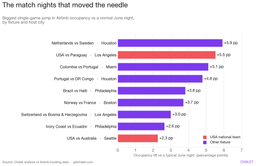
The rule: Underwrite the market as if the catalyst never happens. If the deal still works without the big event or "growth story," then any upside is genuinely upside. If it only works because of the catalyst, you're speculating, not investing.
A comprehensive analysis of short-term rental markets for investors can help you evaluate markets on fundamentals, not speculation.
STR Market Scorecard: Pressure-Test Any City in 30 Minutes
Use this as a fast filter before you spend weeks analyzing a market you should have eliminated on day one.

| Category | What to Check | Red Flags | What "Good" Looks Like |
|---|---|---|---|
| Regulation Durability | Whole-home legality, permit caps, HOA rules, enforcement | Primary-residence only, permits frozen, unclear enforcement | Clear rules, predictable permitting, stable enforcement |
| Demand Depth | Multiple demand drivers across the year | One-season demand only | Several year-round demand drivers |
| Seasonality | Monthly occupancy pattern | Deep off-season + high fixed costs | Manageable valleys or strong mid-term fallback |
| Supply Pressure | Listing growth trend, new builds | Supply growing faster than demand | Supply constrained or demand growing faster |
| Revenue Quality | ADR and occupancy balance (not just headline revenue) | High ADR but low occupancy | Healthy mix, stable RevPAR |
| Expense Volatility | Insurance, taxes, utilities, labor | Insurance instability, high nonrenewals | Insurable, stable costs |
| Operations Ecosystem | PMs, cleaners, contractors | No reliable vendors | Mature vendor network |
| Financing Fit | DSCR viability, lender appetite | Deal only works at unrealistic rates | Works at today's rates with cushion |
| Exit Paths | Owner-occupant + LTR + STR demand | Only STR resale | At least 2 strong exit options |
Quick-score method: Pick your top 5 candidate markets, score each category 1 to 5, and eliminate anything with a red flag in regulation or insurance. Those two categories are deal-killers, not tradeoffs.
How to Choose Your First STR Market in 2026: 5 Steps
You don't need to be an analyst. You need a system.

① Shortlist 5 to 10 markets using real data.
Pick markets that fit your constraints first (drive distance, budget, seasonality tolerance). Ignore "top markets" lists. Start with Chalet's free analytics to compare actual performance data. You can also see how to choose the right investment short-term rental property for a property-level framework that pairs with your market analysis.
② Kill markets fast with regulation checks.
If you can't legally do your strategy (whole home, non-owner occupied, etc.), stop. Don't rationalize. Use Chalet's regulation library to get a quick read, then confirm with the local jurisdiction. Check out markets with favorable STR regulations in FL, TX, and AZ if you're looking for markets where operating is straightforward.
③ Run conservative underwriting on real addresses.
Don't underwrite "the market." Underwrite real properties. Run at least 3 addresses per market. You want to see whether the market works or whether only one unicorn property works. The ROI and DSCR calculator makes this fast.
④ Validate operations before you buy.
Talk to property managers and cleaners before you make an offer. Ask about real occupancy patterns, guest expectations, common repairs, local pain points, and cleaning turnaround reality. Find vetted vendors through Chalet's STR directory. Review the different property management styles for short-term rentals to understand your operational options.
⑤ Get local help from STR-specialist pros.
A specialist agent can help you avoid the micro-market traps: HOA bans, permit dead zones, and neighborhoods where guests don't actually want to stay. Meet an Airbnb-friendly agent through Chalet who already knows the market. Learn why working with an investor-friendly STR realtor is one of the most impactful decisions a first-time buyer can make.
Why STR Market Selection Matters More for 1031 Buyers
If you're doing a 1031 exchange for STR properties, market choice isn't just about returns. It's about time.
The IRS deadlines are real and non-negotiable. Per IRS Instructions for Form 8824, you must identify replacement property within 45 days. And per the exchange regulations via Cornell's Legal Information Institute, you must complete the exchange within 180 days (subject to the "earlier of 180 days or tax return due date" rule).

That means market-selection mistakes hit harder when you're on the clock:
Picking markets with slow permitting or long licensing backlogs
Choosing property types with limited lender appetite
Underestimating time to stabilize operations and prove income
Not identifying enough backup properties early in the process
Understand the full 1031 exchange timeline before you start your market search. Common errors like underestimating due diligence time or picking markets with permit backlogs are covered in 5 common mistakes to avoid in 1031 exchanges and STR investments.
If you're exchanging into STRs, favor markets where you can get legal, insured, and operational quickly. Speed-to-operate is a real edge. Chalet coordinates exchange-savvy agents, DSCR and conventional lenders, and compliant markets to help 1031 buyers stay on schedule.
How Chalet Helps You Avoid These Mistakes
Every mistake in this guide boils down to one thing: making a market decision without the right data, the right tools, or the right people in place. That's the problem Chalet was built to solve.

Free market analytics and dashboards.
Compare cities, neighborhoods, and property types on real performance data. Occupancy, ADR, RevPAR, supply trends, all without a subscription or paywall. Explore the analytics here.

ROI and DSCR calculator.
Stress-test any address with conservative, base, and upside scenarios. See whether the numbers actually work at today's rates before you commit. Run the calculator.

Regulation library.
Get a fast read on local STR rules: permits, caps, zoning, and enforcement, organized by market. Check regulations.
Vetted vendor network.
From STR-specialist real estate agents and DSCR lenders to property managers, insurance providers, cleaners, furnishing services, and cost-seg professionals. One platform, one place. Browse the vendor directory.
Airbnb-friendly agents.
Local agents who specialize in short-term rental transactions and know the micro-market traps, HOA restrictions, and permitting realities that generic agents miss. Meet an agent.
Listings pre-screened for STR potential.
Don't start from scratch. Browse properties already evaluated for short-term rental viability. See Airbnb rentals for sale.
The whole point of Chalet is to take you from research to ROI to real-world action, without juggling five different platforms and hoping the data lines up. It's free to explore, and when you're ready to move, we connect you with the pros who actually close deals.
Frequently Asked Questions

How Do I Pick the Right STR Market If I've Never Invested Before?
Start with your personal constraints (budget, drive distance, seasonality tolerance, risk appetite) and use those to filter markets before you look at revenue data. Then run the scorecard from this guide on your top 3 to 5 candidates. Focus on regulation durability, demand depth, and financing fit first. Revenue is important, but only if you can legally operate, insure the property, and cover debt. Our guide to buying an Airbnb with no experience walks through the exact first steps.
What's the Single Biggest Mistake First-Time Airbnb Investors Make?
Choosing a market based on headline revenue or "top 10" lists without verifying that the market fits their specific financial situation, risk tolerance, and operational capacity. A market that's perfect for a cash buyer with local connections may be disastrous for a first-timer financing with a DSCR loan from out of state. The question of whether to invest in-state or out-of-state is a critical one that most beginners skip entirely.
How Many Markets Should I Analyze Before Buying My First STR?
We recommend starting with 5 to 10, then quickly narrowing to 2 or 3 using regulation checks and conservative underwriting. Run at least 3 real property addresses per finalist market. You want to confirm that the market itself works, not just one exceptional listing.
Should I Invest in a Market Close to Home or Far Away?
There's no universal answer, but proximity matters more than most first-timers think. Being within driving distance makes it easier to audit properties, interview vendors, and respond to emergencies early on. Remote markets can absolutely work, but you'll need a stronger operations stack (reliable PM, cleaners, handyman) to compensate. Read should I buy an Airbnb in my state or out of state for a full breakdown of the trade-offs.
How Do Regulations Affect STR Market Selection?
Regulations can make or break a deal. Some cities restrict whole-home rentals to owner-occupants, cap the number of permits in a neighborhood, require annual renewals, or have HOA rules that override city policy. Always check the full "regulation ladder" (city, county, zoning, HOA, enforcement) before committing. Chalet's regulation library is a good starting point. For a deeper look at how regulations work in practice, see navigating rental regulations for short-term and mid-term rentals.
What's a DSCR Loan, and Why Does It Matter for Market Selection?
A DSCR (debt service coverage ratio) loan qualifies you based on the property's income rather than your personal income. Lenders typically want a DSCR of at least 1.2 to 1.3, meaning the property's projected income should cover 120% to 130% of the debt payment. This means your market choice directly affects whether you can get financing, because low-RevPAR markets may not meet DSCR thresholds. Test this with Chalet's calculator. For a complete breakdown, read how to qualify for a DSCR loan.
Is It Better to Invest in a Seasonal or Year-Round STR Market?
Year-round markets are generally easier for first-timers because cash flow is more predictable. Seasonal markets can generate higher annual revenue, but they require larger cash reserves to cover dead months. If you choose a seasonal market, underwrite monthly (not just annually) and plan for a bigger reserve fund.
How Do I Evaluate Whether a Market's Vendor Ecosystem Is Strong Enough?
Before you commit, try to fill your "minimum viable ops stack" with real contacts: property manager, 1 to 2 cleaners who do same-day turns, handyman, and emergency coverage. If you can't find reliable options, that's a warning sign. Talk to local property managers about turnaround realities and guest expectations. Chalet's STR directory can help you find vetted vendors in your target market.
What Should 1031 Exchange Investors Look for in an STR Market?
Speed. The 45-day identification and 180-day completion deadlines mean you can't afford to pick a market with slow permitting, scarce lender options, or complex operational setup. Look for markets with clear STR regulations, available DSCR or conventional financing, and a mature vendor network so you can get legal, insured, and operational fast. Read more about Airbnb rentals and 1031 exchanges and explore Chalet's 1031 exchange resources to get started.
Your Next Move
Pick one based on where you are right now:
Ready to shortlist cities? Analyze markets
Need to confirm legality? Check local STR regulations
Have a specific property in mind? Run ROI/DSCR for this address
Want boots-on-the-ground help? Meet an Airbnb-friendly agent
Want to browse deals already screened for STR potential? See Airbnb rentals for sale
Need vendors to operate confidently? Set up your STR operations
The right market won't find you. But with the right data and the right process, you'll find it faster than you think. Chalet is here to help you get there.