
If you're researching whether to self-manage or hire a property manager for your Airbnb rental, you're not really asking "which one is better?"
You're asking:
How much work am I actually signing up for, and what will it cost me in cash, stress, and missed revenue if I choose wrong?
This is about your short-term rental (STR) investment's profitability and your quality of life.
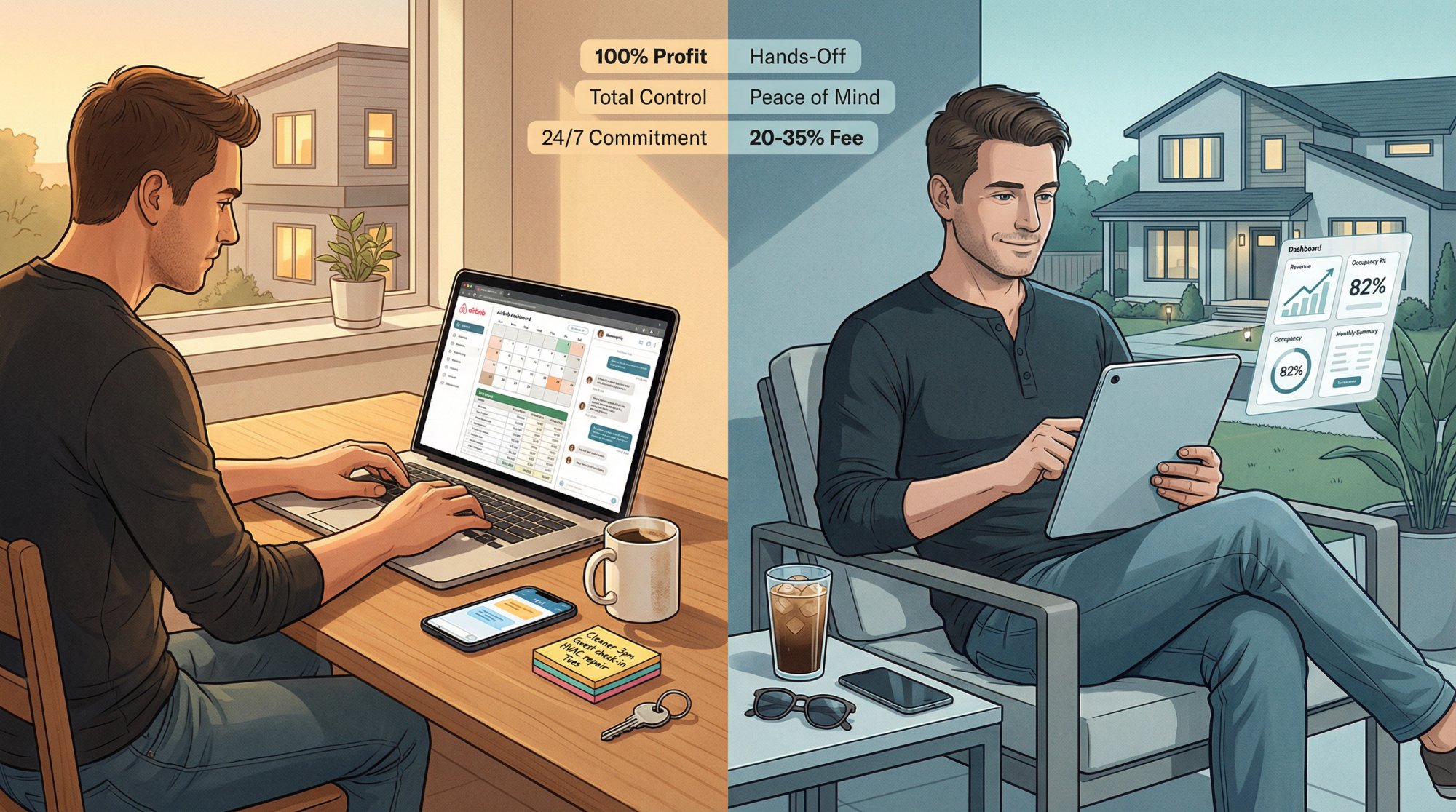
Let's get into the numbers, the hidden costs, and the honest trade-offs so you can make this decision with clarity.
Should You Self-Manage or Hire a Property Manager?
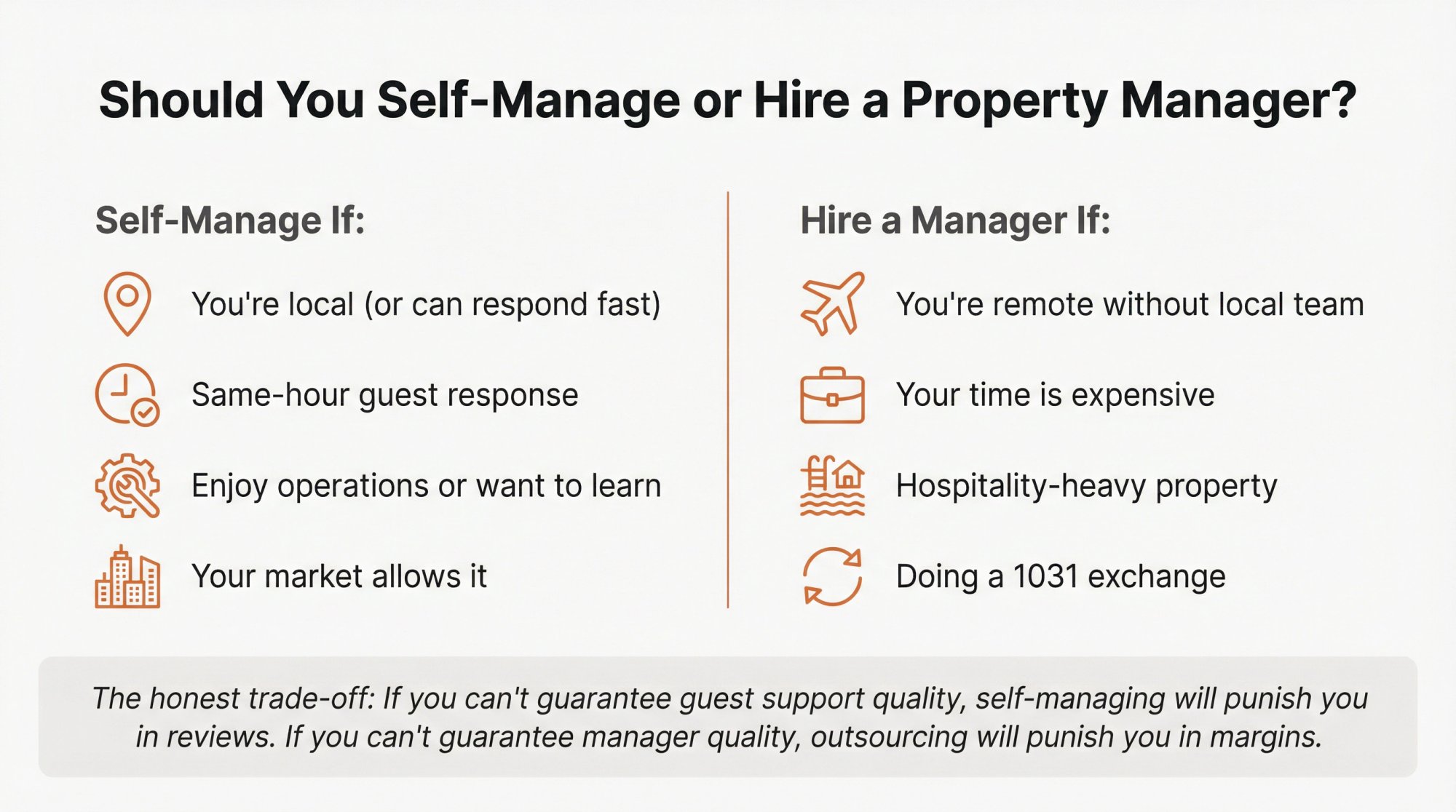
Self-manage if most of these are true:
• You're local (or can respond fast)
• You can commit to same-hour guest response
• You enjoy operations or want to learn the system for future scaling
• Your market allows it (some cities require local contacts)
Hire a property manager if most of these are true:
• You're remote without a solid local team
• Your time is expensive (high-income job, family commitments, travel)
• You're buying a hospitality-heavy property (pool, hot tub, luxury finishes)
• You're doing a 1031 exchange and need speed without chaos
And the most honest version: If you can't guarantee guest support and turnover quality, self-managing will punish you in reviews. If you can't guarantee manager quality, outsourcing will punish you in margins.
What Does Self-Managing an Airbnb Actually Involve?
Self-managing means you run the entire operation. You create the listing, respond to inquiries, set pricing, coordinate cleanings, handle maintenance, and address emergencies at any hour.
The upside?
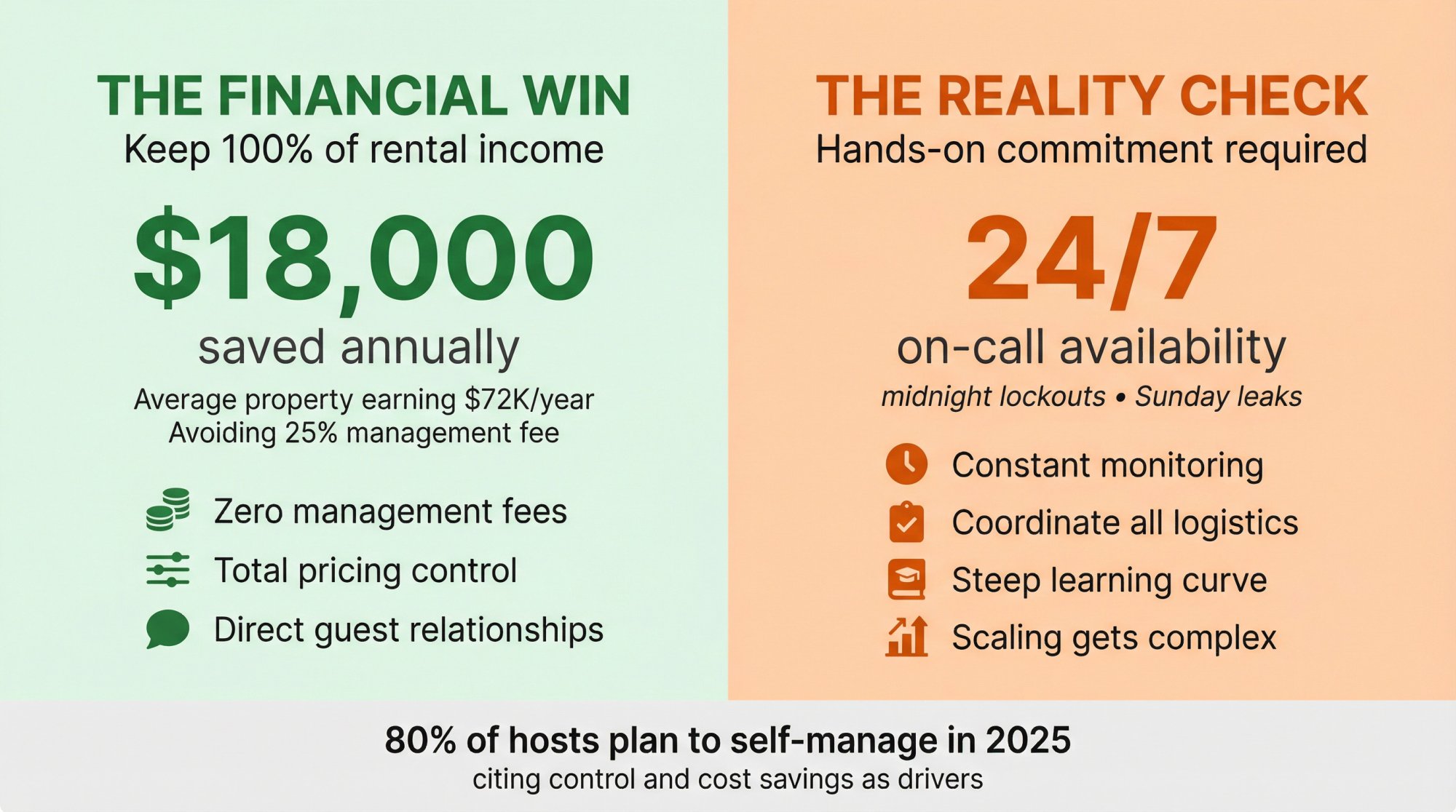
You keep 100% of rental income minus routine expenses. According to Chalet's property management guide, this can mean keeping an extra 20-35% that would otherwise go to management fees.
But most guides won't tell you this: being an Airbnb host is a hands-on commitment. You need reliable local help even if you don't hire a full manager. Most self-managing hosts build a team of cleaners and handymen, especially for properties they don't live near.
Why Do Hosts Choose to Self-Manage Their Airbnb?
You Keep All the Profit
Avoiding a 20-30% management fee means every dollar of rental income goes to you. In competitive markets, that extra margin can make the difference between positive cash flow and barely breaking even.
Quick math: if your STR earns $72,000 annually, a 25% management fee is $18,000. That's real money.
Total Control Over Guest Experience
You decide pricing, booking approvals, house rules, and communication style. Many hosts take pride in personal touches like custom welcome messages or local recommendations. This hands-on care often translates to great reviews.
As one experienced host noted: Nobody will care for your property and guests as you do.
Direct Communication and Faster Adaptation
You interact with guests directly rather than through an intermediary. You get unfiltered feedback and can adjust quickly to market changes. Local event coming up? Slow season hitting? You can instantly tweak rates or promotion strategies using dynamic pricing tools.
Industry data shows that nearly 80% of hosts plan to self-manage their rentals in 2025, citing better control and cost savings as primary drivers.
What Are the Real Costs of Self-Managing an Airbnb?
You're On Call 24/7
Running an Airbnb rental can feel like a full-time job. You must be ready to handle guest needs at any hour, whether it's a midnight lockout or a Sunday plumbing leak. There's essentially no "off switch."
Hosts often report that while one property might only take an hour or so daily, the mental load of always being available is significant.
Hands-On Logistics Add Up
All operational details fall on you: finding and overseeing quality cleaners, scheduling turnovers, restocking supplies, arranging repairs. If your cleaner no-shows, you're the one washing sheets at 11 PM.
Managing remotely is doable, but it requires assembling a rock-solid local team and periodic property checks.
The Learning Curve Is Real
First-timers face a lot to learn: optimizing listing photos, understanding local STR regulations and taxes, mastering hospitality best practices. Mistakes like double-bookings or pricing errors are yours to fix.
Inexperienced self-managers might underperform on revenue if they aren't using market analytics or marketing broadly. One analysis found that professionally managed Airbnbs earn about 25% higher daily revenue and 18% higher occupancy rates on average than DIY hosts.
The caveat?
Professional managers often concentrate in high-demand markets and use sophisticated pricing tools. A dedicated individual host with the right tools can achieve similar results, but it requires effort and expertise.
Scaling Gets Complicated
With one rental, self-management might be very achievable. But each additional property means more guest messages, more turnovers, more complexity. Many hosts can comfortably self-manage 1-2 listings. Beyond that, you either need to outsource parts of the work or risk stretching yourself thin.
What Does an Airbnb Property Manager Do (and Cost)?
Hiring a property manager means paying a professional to handle the operational heavy lifting. A full-service vacation rental manager typically handles:
• Marketing your listing across platforms
• Managing bookings and guest communication
• Coordinating cleanings and maintenance
• Sometimes handling supplies or linens
The goal? Making your investment "hands-off."
How Much Does Airbnb Property Management Cost in 2026?
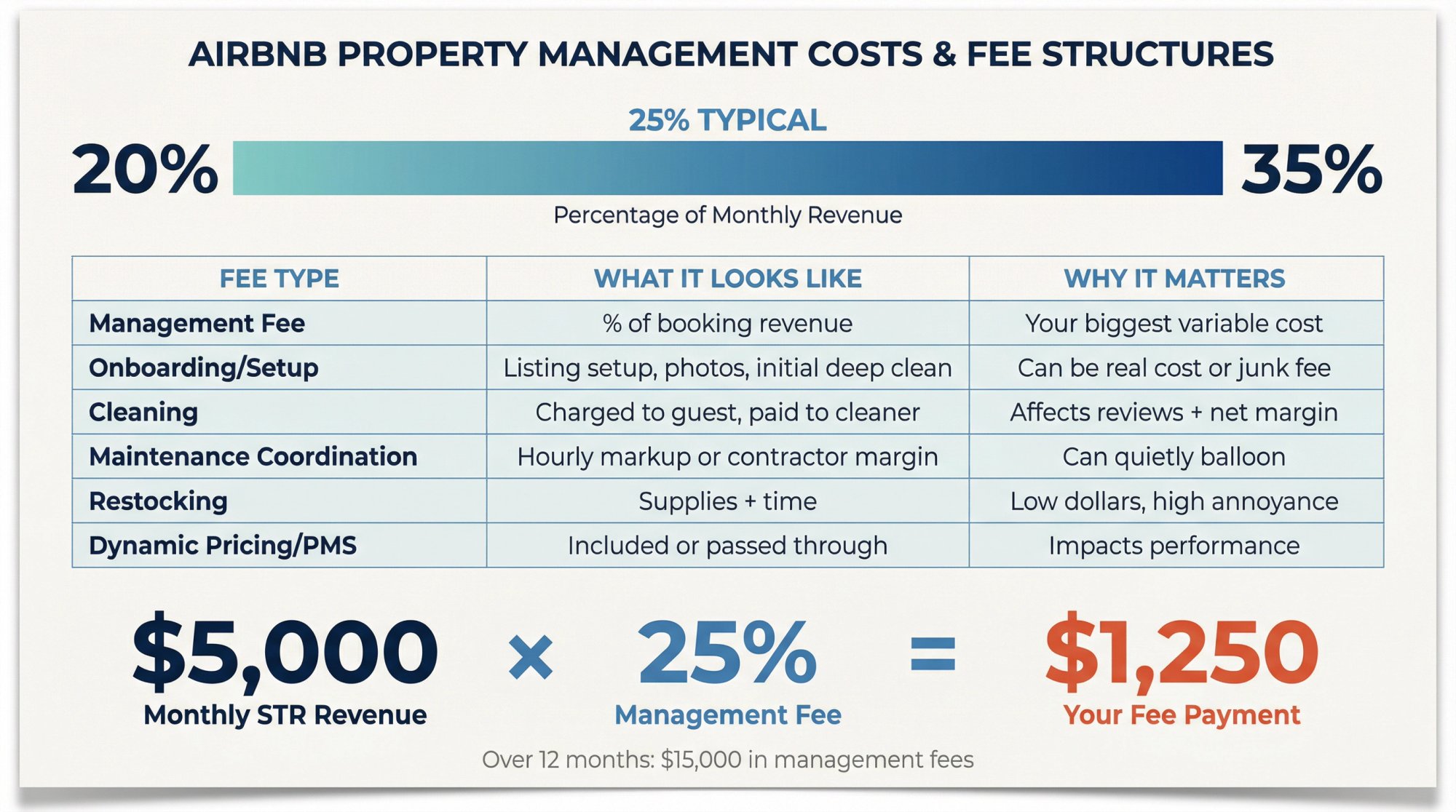
In the U.S. market, full-service Airbnb management companies charge roughly 20-35% of monthly revenue on average. Some premium or boutique services can charge as high as 40%, while limited-service managers might charge less.
| Fee Type | What It Looks Like | Why It Matters |
|---|---|---|
| Management Fee | % of booking revenue | Your biggest variable cost |
| Onboarding/Setup | Listing setup, photos, initial deep clean | Can be real cost or junk fee |
| Cleaning | Charged to guest, paid to cleaner | Affects reviews + net margin |
| Maintenance Coordination | Hourly markup or contractor margin | Can quietly balloon |
| Restocking | Supplies + time | Low dollars, high annoyance |
| Dynamic Pricing/PMS | Included or passed through | Impacts performance |
Example: If your STR earns $5,000 in a month, a 25% management fee would be $1,250. You'd receive the remaining $3,750 before other expenses like mortgage and utilities. Over a year, that fee could total tens of thousands of dollars.
The Airbnb Fee Change That Affects Property Management Costs
This is where many investors get blindsided in 2026.
Airbnb has two fee structures:
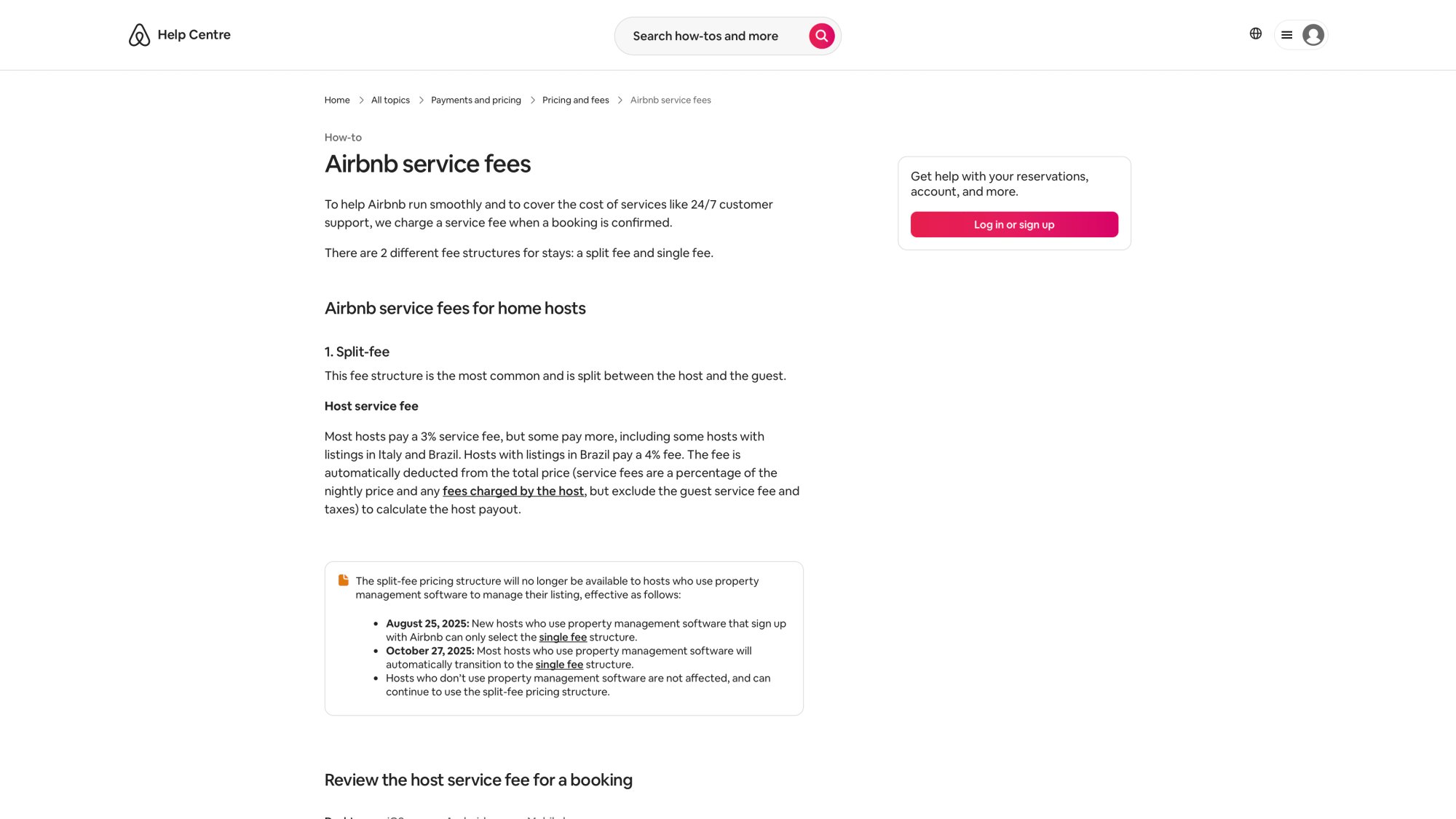
Split Fee (most common historically): Host pays 3%; guests pay 14.1-16.5% of booking subtotal
Single Fee (host-only): The entire fee is deducted from host payout, typically 14-16%
Now pay attention. Airbnb explicitly states that the split-fee structure is no longer available to hosts who use property management software. Key dates:
• August 25, 2025: New PMS-connected hosts can only select single fee
• October 27, 2025: Most PMS-connected hosts automatically transition to single fee
Why this matters: Many property managers run your listing through a PMS/channel manager, which can trigger the single-fee structure. If you don't adjust pricing intentionally, your payout per night can drop.
Action item: If you hire a manager, ask: "Will my listing be PMS-connected? If yes, how are you adjusting rates so my net stays consistent after the fee change?"
Why Do Investors Hire Airbnb Property Managers?
"Hands-Off" Convenience
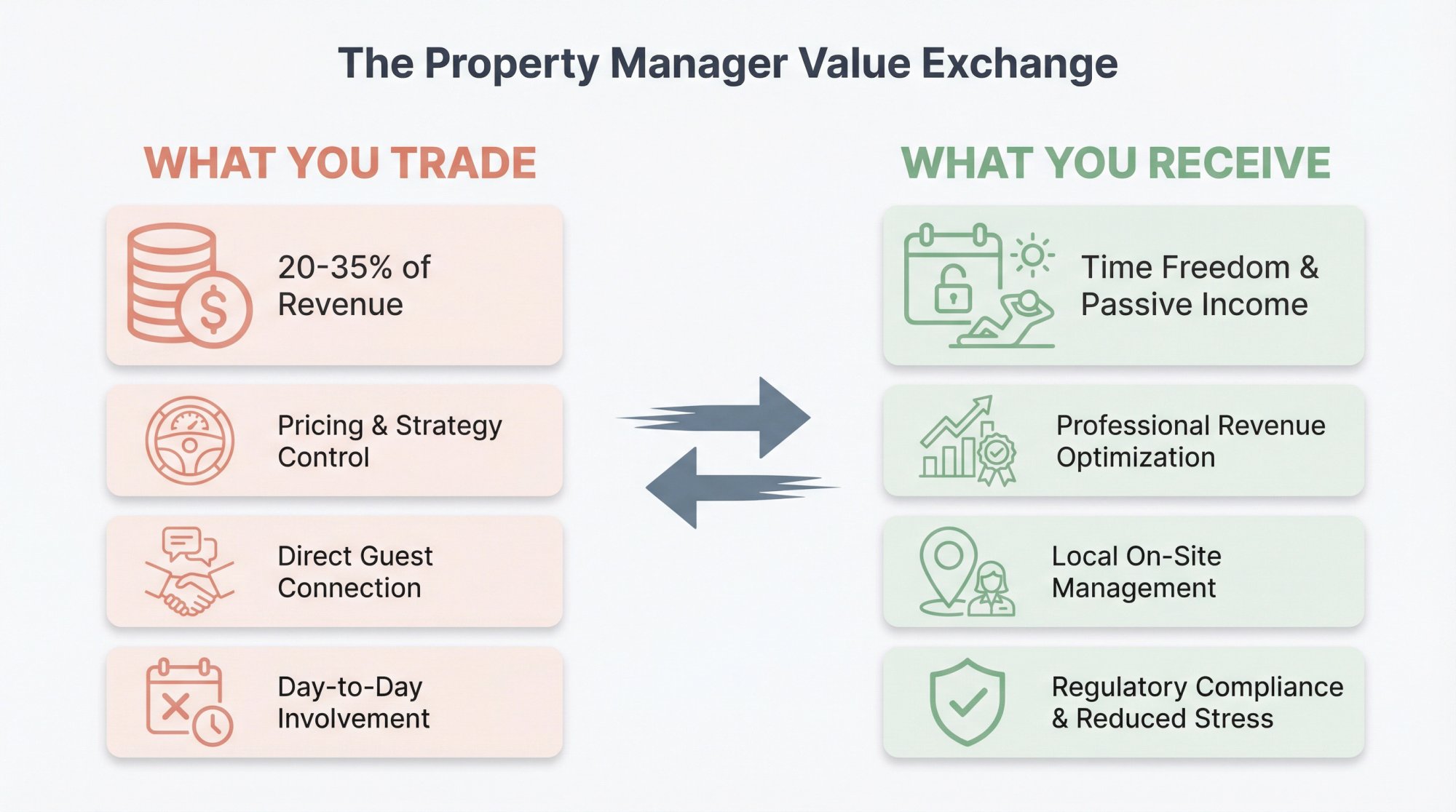
The biggest draw is freedom from the daily grind. A good property manager handles 2 a.m. guest calls, cleaning crew scheduling, broken AC repairs, and everything in between. You can truly treat your rental as a passive investment.
This is invaluable if you work full-time, live far from the property, or simply don't want the stress of hospitality work. Many investors see hiring a manager as "buying back their time."
Expertise and Optimized Performance
Established STR managers come with experience and data-driven systems. They often use professional photography, optimized listings on multiple platforms, and revenue management tools to maximize bookings.
Property managers commonly implement dynamic pricing algorithms (PriceLabs, Wheelhouse, etc.) to adjust rates daily for demand changes. They also market beyond Airbnb (listing on Vrbo, Booking.com, direct booking sites), which can expand occupancy.
They tend to enforce high standards for cleaning and maintenance, boosting guest satisfaction and reviews.
Local Support Means Happier Guests
If you're not near your rental, a local management team is almost essential. They can ensure smooth self check-in, troubleshoot in person, and respond on-site to emergencies.
Having a manager means someone is available to reset WiFi or change a propane tank without you having to scramble. This on-the-ground presence prevents small issues from ruining a guest's stay.
Reduced Stress and Burnout
Hosting can be emotionally taxing. You worry about difficult guests, cleaning issues, or bad reviews. Turning those responsibilities over to a professional can be a huge relief.
As one veteran host put it: with a manager, "hosting feels like passive income again" because someone else handles the hard parts.
Knowledge of Regulations and Taxes
A competent property management company helps ensure you're in compliance with local laws (permits, zoning, HOA rules) and might even handle occupancy tax remittance on your behalf.
Managers who operate in your market likely know the ins and outs of what's required. They can also advise on insurance or safety upgrades (like installing smoke detectors or pool fences), reducing risk and liability for you.
What Are the Hidden Costs of Hiring an Airbnb Manager?
High Fees Eat Into Profit
The convenience comes at a steep price. Paying around a quarter or more of your gross income to a manager will undeniably reduce profit margins.
In fact, 82% of hosts in one 2025 survey said avoiding high fees was a main reason they chose to self-manage.
Unless a manager substantially boosts your revenue, expect your net income to be lower than if you did the work yourself. You're essentially trading income for time.
Always run the numbers. You can use Chalet's Airbnb ROI calculator to model your cash flow with a 25% management commission versus 0% if you DIY.
Loss of Control and Flexibility
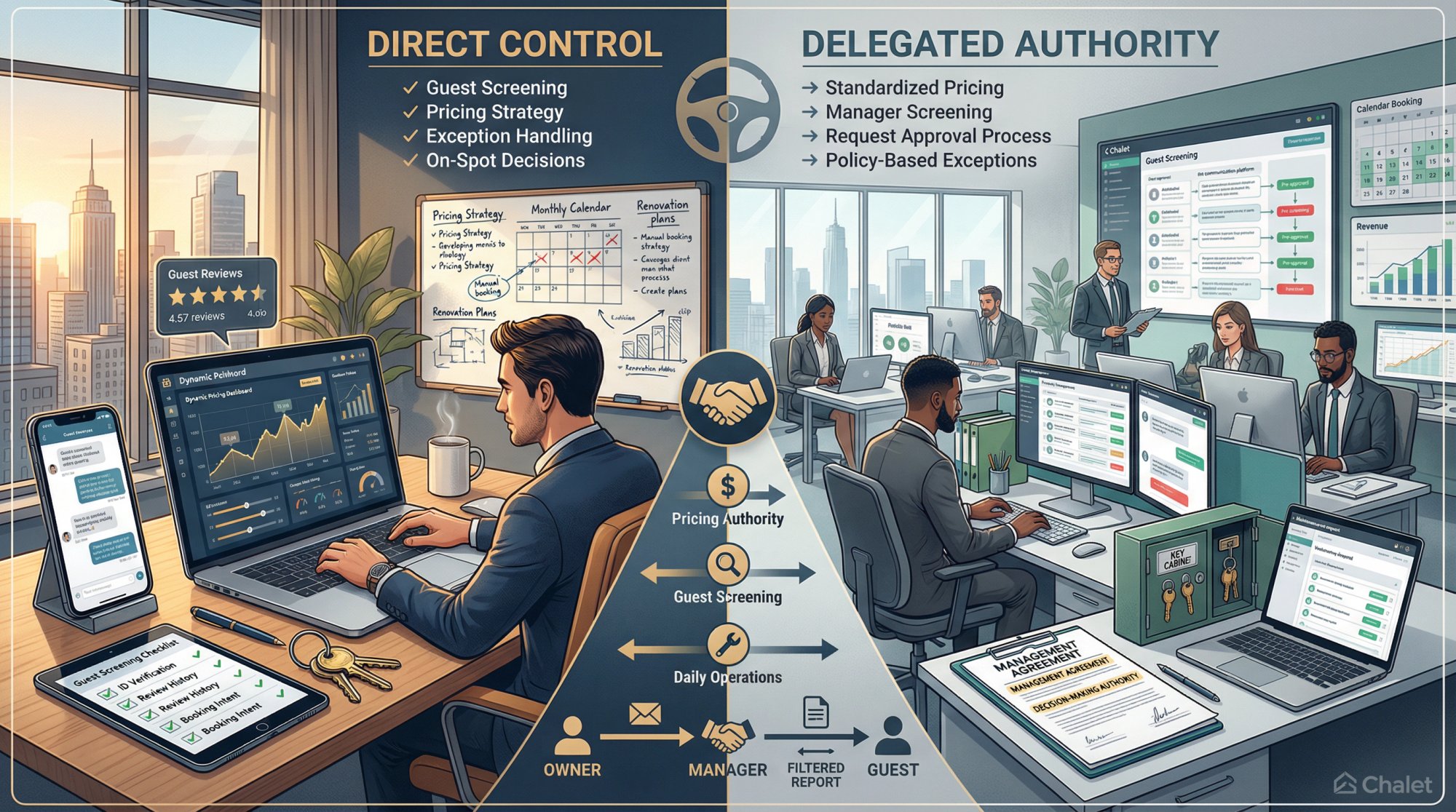
Once you hand over the keys (literally and figuratively), you have to trust the company's methods. You'll have less say in screening guests, setting pricing, or making on-the-spot exceptions.
Some firms use standardized pricing tiers or rules that might not align with your strategy. Property managers act as an intermediary between you and guests, which means you often won't know about issues or feedback until after the fact.
Owners who like being involved may feel frustrated being "out of the loop" on their own property's day-to-day operations.
Variable Quality of Care
Not all managers are equal. Some will truly treat your home as if it's their own; others might slack on maintenance or cleanings, especially if they're stretched thin with many properties.
A common complaint among hosts is that with big management companies, you're just another account. The person physically inspecting your unit might be a low-paid employee who doesn't have an ownership mindset. Mistakes or neglect can happen, and ultimately you bear the cost in damages or bad reviews.
It's crucial to vet a manager's reputation and processes (how do they ensure quality cleans? how do they handle guest complaints?) before signing on.
Contracts and Commitments
Most professional managers require a contract, often 1 year in length. These contracts may have notice periods (30 or 60 days) if you want to exit, and sometimes penalties for early termination.
This means if you're unhappy with the service, you can't always drop them immediately without consequence. You also need to clarify who "owns" the Airbnb listing. Some companies make the listing under their account, which can complicate things if you part ways.
Less Personal Guest Experience
While many guests don't mind dealing with a professional outfit, a subset of travelers seek that "direct host" experience. Large management firms might not go the extra mile with personal touches.
From the owner's perspective, you also miss out on forging relationships with guests (some of whom could become return visitors or direct bookers). You outsource the hospitality, but along with it, some of the joy and learning that come from hosting directly.
Smart approach: Self-manage for the first six months to a year to learn the ropes and understand your property's operations. You'll gain valuable insight into pricing, guest concerns, and effort involved. If you then decide to hire a manager, you'll be better positioned to vet them and hold them accountable (because you'll know what the job entails).
Hybrid Airbnb Management: Best of Both Worlds?
The decision doesn't have to be binary. Many hosts are finding creative hybrid approaches that blend personal involvement with outside help.
Airbnb Co-Hosts
Airbnb launched an official Co-Host Marketplace in late 2024 that connects hosts with experienced local co-hosts. A co-host can assist with tasks like guest messaging, key exchanges, or emergency help, usually for a smaller percentage of income or a fixed fee per task.
By early 2025, over 15,000 co-hosts had joined the program, managing 100,000+ listings. Interestingly, co-hosts on Airbnb have an average guest rating of 4.86 out of 5, higher than the 4.62 average for larger traditional management companies.
This suggests that an attentive individual co-host can sometimes deliver a better guest experience than a big firm. Co-hosting arrangements let you offload time-consuming pieces while retaining control of your listing and overall strategy.
"Half-Service" Management Companies
Some newer companies market themselves as cheaper alternatives to full-service. They might handle online aspects (listing, marketing, pricing, guest screening) for a lower fee, while you handle on-the-ground operations like cleaning turnovers and maintenance.
Evolve is one of the best-known in this category. They charge around 10% per booking, far lower than industry standard. In exchange, owners or their local contacts must do the physical tasks.
This hybrid model works well if you don't mind coordinating cleanings and upkeep but want help keeping your listing filled with guests.
DIY Tech Stack
Even without hiring anyone, you can approximate what a property manager does by assembling software tools.
Using a channel manager or PMS (property management system) like Guesty, Hostaway, or Hospitable can centralize your bookings and messages across Airbnb/Vrbo/etc. Dynamic pricing tools (PriceLabs, Beyond Pricing) adjust your rates automatically to match demand. Automated messaging apps can send check-in instructions or review reminders.
In 2025, 96.8% of self-managing hosts agreed that using such tools was essential to stay competitive.
The good news: many of these tools are affordable even for a single-property host, and some have free tiers. By using technology strategically, you close much of the gap between an individual host and a professional operation.
Chalet's STR Directory highlights recommended tools and services that can help streamline self-management, from pricing optimizers to insurance and cleaning networks.
Self-Manage or Hire: Decision Framework That Works
Choosing between self-managing or hiring a property manager ultimately comes down to your personal situation and priorities.
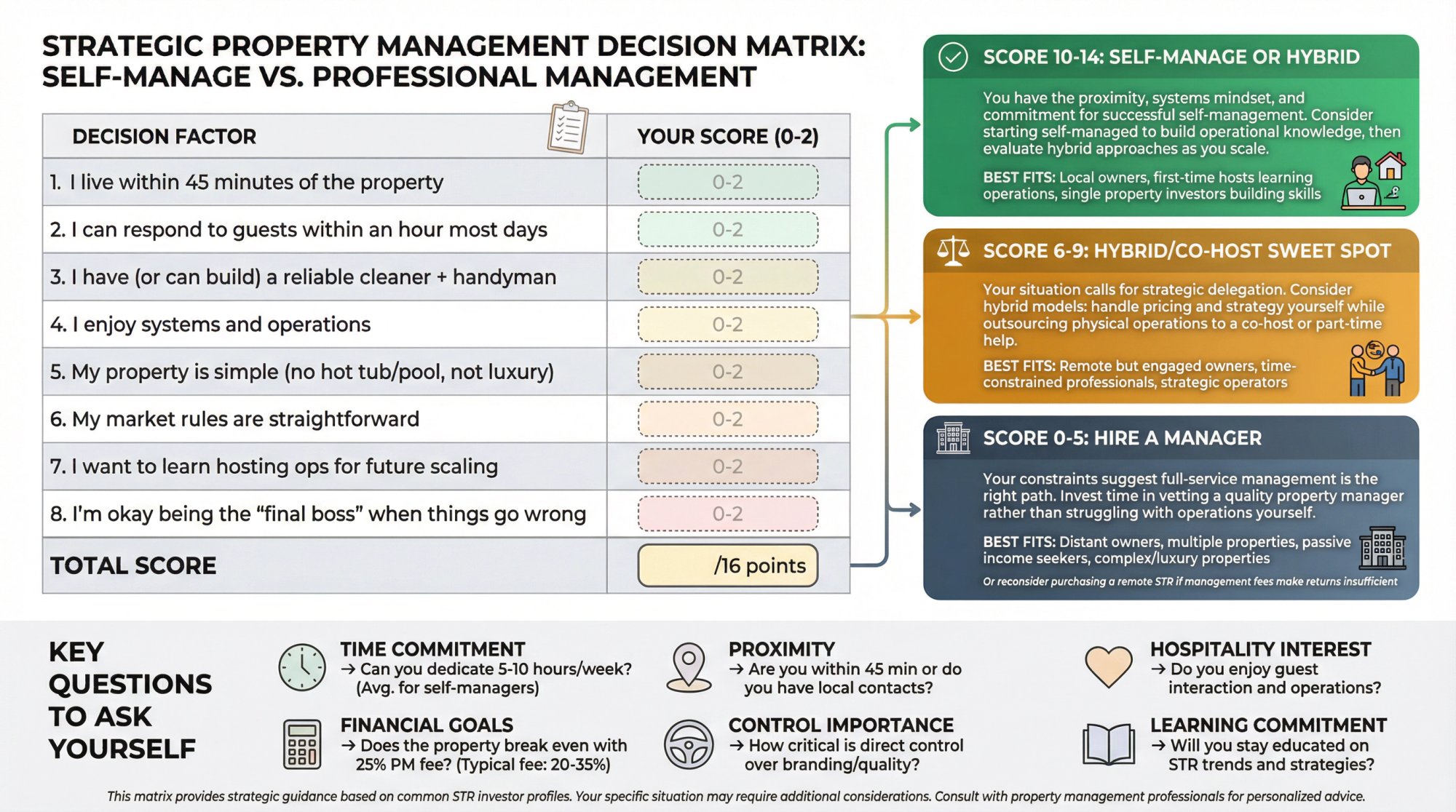
Score This Decision Matrix
Score each statement 0-2 (0 = not true, 2 = very true). Add up your total.
| Statement | Your Score (0-2) |
|---|---|
| I live within 45 minutes of the property | |
| I can respond to guests within an hour most days | |
| I have (or can build) a reliable cleaner + handyman | |
| I enjoy systems and operations | |
| My property is simple (no hot tub/pool, not luxury) | |
| My market rules are straightforward | |
| I want to learn hosting ops for future scaling | |
| I'm okay being the "final boss" when things go wrong |
If you score 10-14: Self-manage or hybrid is likely best
If you score 6-9: Hybrid/co-host is usually the sweet spot
If you score 0-5: Hire a manager (or reconsider buying a remote STR)
Questions to Ask Yourself
How much time can you realistically dedicate?
If you have a 9-to-5 job or other major commitments, can you respond to guests promptly and manage turnovers? Consider that even with automation, you'll need to monitor the property daily.
One way to gauge this: start handling all the inquiries and planning before your listing goes live. If it already feels overwhelming, that's a sign a manager or co-host could be worthwhile.
Are you located near the property?
Long-distance owners often find full-service management or a reliable local co-host essential. Some markets also legally require having a local contact person available.
If you live close by and can check on the place often, self-management is far more feasible. Remote hosts can still DIY, but you'll depend heavily on hired cleaners and handymen. Be honest about whether you have trustworthy contacts or the ability to find and oversee them from afar.
Do you enjoy the hospitality aspect?
Some people love interacting with guests and actively managing a business. If that's you, self-management might actually be fun and rewarding.
On the flip side, if dealing with customer service or cleaning coordination sounds like a nightmare, don't force yourself into a role you hate. It could be better to treat your STR purely as an investment and pay a manager.
What are your financial goals?
Run the numbers for both scenarios. If a property barely breaks even with a 25% management fee, you might have to self-manage to make it viable.
Conversely, if the cash flow is strong enough, you might gladly sacrifice some profit for a manager's convenience. Factor in that a good manager might increase revenue with better marketing, but usually they won't increase it enough to fully cover their fee. Expect some drop in net income.
Are you comfortable with that trade-off for more free time?
How important is control over branding and quality?
If you have a very specific vision for your guest experience or you're building your own "brand" of rentals, you may find a manager's standard approach too limiting. Self-managing allows you to craft every aspect of the experience.
On the other hand, if you just want the place rented and aren't as particular about details, a management company's formula might be perfectly fine.
Can you commit to learning and continuous improvement?
The STR industry is dynamic. Pricing trends, algorithms, and traveler preferences change. Self-managing means you'll need to stay educated (reading blogs, monitoring local competition, adjusting strategy).
If that excites you, great! If not, a professional who does that for a living might keep your property from falling behind.
Your Decision Isn't Permanent
Many hosts start out one way and switch as circumstances change. It's not uncommon to self-manage your first property, then hire managers once you buy a second or third.
In 2025, a notable number of owners who tried professional management ended up returning to self-management for reasons like higher earnings and greater oversight control.
The lesson: you're never stuck. You can adapt your approach over time.
How to Self-Manage Your Airbnb Successfully: 14-Day Setup
This is how you make self-management not suck.
Days 1-3: Lock in the "Always Works" Basics
• Smart lock or keypad + backup lockbox
• WiFi that doesn't drop + router in a safe spot
• Labeled breaker panel + shutoff instructions
• Safety kit (smoke/CO detectors, extinguisher, first aid)
Days 4-6: Build Your Turnover Machine
• Hire cleaner (do a test clean first)
• Create a photo-based checklist (kitchen, bathrooms, beds, floors, hot tub if relevant)
• Set "re-clean rules" (what triggers a redo)
• Linen plan (owner closet or service)
Days 7-9: Build Message Automation
Write templates for:
• Inquiry response
• Booking confirmation
• Check-in instructions
• "Mid-stay check"
• Checkout instructions
• Review request
• Damage/issue workflow
Goal: 80% of messages become "tap-to-send"
Days 10-12: Set Pricing Guardrails
• Base price anchored to market comps
• Weekend premiums
• Min-stay rules for peak season
• Gap-night rules (when to discount vs hold)
• Last-minute logic
Days 13-14: Set Your Tracking
Track weekly:
• Booking pace (next 30/60/90 days)
• Occupancy + ADR trend
• Cleaning issues (count + root cause)
• Guest complaints by category
• Refund/discount dollars (and why)
Check out Chalet's STR Directory to build your complete vendor stack.
How to Choose an Airbnb Property Manager
Force Clarity on Fee Math (In Writing)
Ask these exact questions:
1. "What is your management fee calculated on?"
2. "Do you charge extra for maintenance coordination?"
3. "Do you take any markup from vendors?"
4. "Who sets cleaning fees, and who keeps the cleaning fee?"
5. "What fees are charged to guests (and who keeps them)?"
6. "Will you connect my listing via property management software (PMS)?"
This last question matters because it can affect the Airbnb fee structure (single fee vs split fee).
Demand a Performance Process, Not a Pitch Deck
A good property manager can explain:
• How they set prices
• How they handle gap nights
• How they handle low-season demand
• How often they update listings/photos
• What they do after a bad review
• How they inspect cleans
Contract Clauses That Matter More Than the Fee Percentage
Watch for:
Termination: Can you exit in 30-60 days, or are you trapped?
Ownership of the listing: Do you own the Airbnb listing, photos, reviews?
Reserve account rules: How much cash do they hold and why?
Repair approvals: What spend requires your approval?
Guest refunds: Who can issue refunds and what's the policy?
Exclusivity + channel control: Can you use your own channels or direct bookings?
Set a 90-Day Scorecard Before You Sign
Don't wait a year to "see how it goes."
Track:
• Response time and guest sentiment
• Review rating trend
• Occupancy and ADR vs local comps
• Maintenance ticket count + resolution time
• Refund/discount dollars
• Photo-based cleaning inspections (yes/no)
Airbnb Self-Manage vs Property Manager Cost Comparison
Don't compare "PM fee" to $0. Compare:
PM cost = management fee + extra fees + any pricing/tech costs + your oversight time
vs.
Self-manage cost = your time + tools + local help + your own mistakes (yes, that's a cost)
A Simple Break-Even Model You Can Actually Use
Step 1: Estimate annual gross booking revenue
Use realistic occupancy + ADR. If you haven't bought yet, start with market comps.
Run projections: Chalet's Airbnb Calculator
Benchmark markets: Chalet's Market Analytics
Step 2: Compute manager cost range
• Conservative: 20%
• Typical: 25%
• High: 35%
Step 3: Estimate self-manage "replacement labor"
Even if you self-manage, you usually still pay for:
• Cleaning (per turnover)
• Handyman / on-call help
• Restocking deliveries
• Possibly a co-host for emergencies
Step 4: Value your time
Pick a real number. Even $50/hr changes the math.
Example (Use as a Template, Not a Promise)
Assume:
• Gross booking revenue: $72,000/year
• PM at 25%: $18,000/year
• Self-manage "ops help + tools": $4,500/year (local runner + software + misc)
Difference: $13,500/year before you account for your time.
Now the key question becomes:
Can a good manager (or a better system) create $13.5k in value through higher rates, fewer gaps, better reviews, fewer mistakes, and less owner time?
Sometimes yes. Sometimes no. Your job is to measure it, not guess.
Guidance by Investor Type
First-Time STR / Airbnb Buyers
Your priority is learning the machine.
Best path for many:
• Self-manage for 60-120 days (or hybrid)
• Document everything
• Outsource later once you know what "good" looks like
Next steps:
• See Airbnb rentals for sale
• Meet an Airbnb-friendly agent
1031 Exchange & LTR→STR Investors
Your priority is speed + compliance.
Best path for many:
• Line up a manager or co-host before closing
• Confirm local rules early (permits, primary residence limits, local contact rules)
• Build a "day 1 operations" plan so the property produces quickly
Check local STR regulations before making your final decision.
Portfolio Builders (1-5 STR Units)
Your priority is scalability and consistency.
Best path:
• Standardize a playbook
• Outsource execution (cleaning/maintenance) first
• Keep pricing/strategy centralized until you trust a manager's results
How Chalet Helps You Make This Decision (and Execute It)
Whether you decide to self-manage or hire a property manager, Chalet provides the tools and network to execute successfully.
For Self-Managers
Free Analytics & Calculators
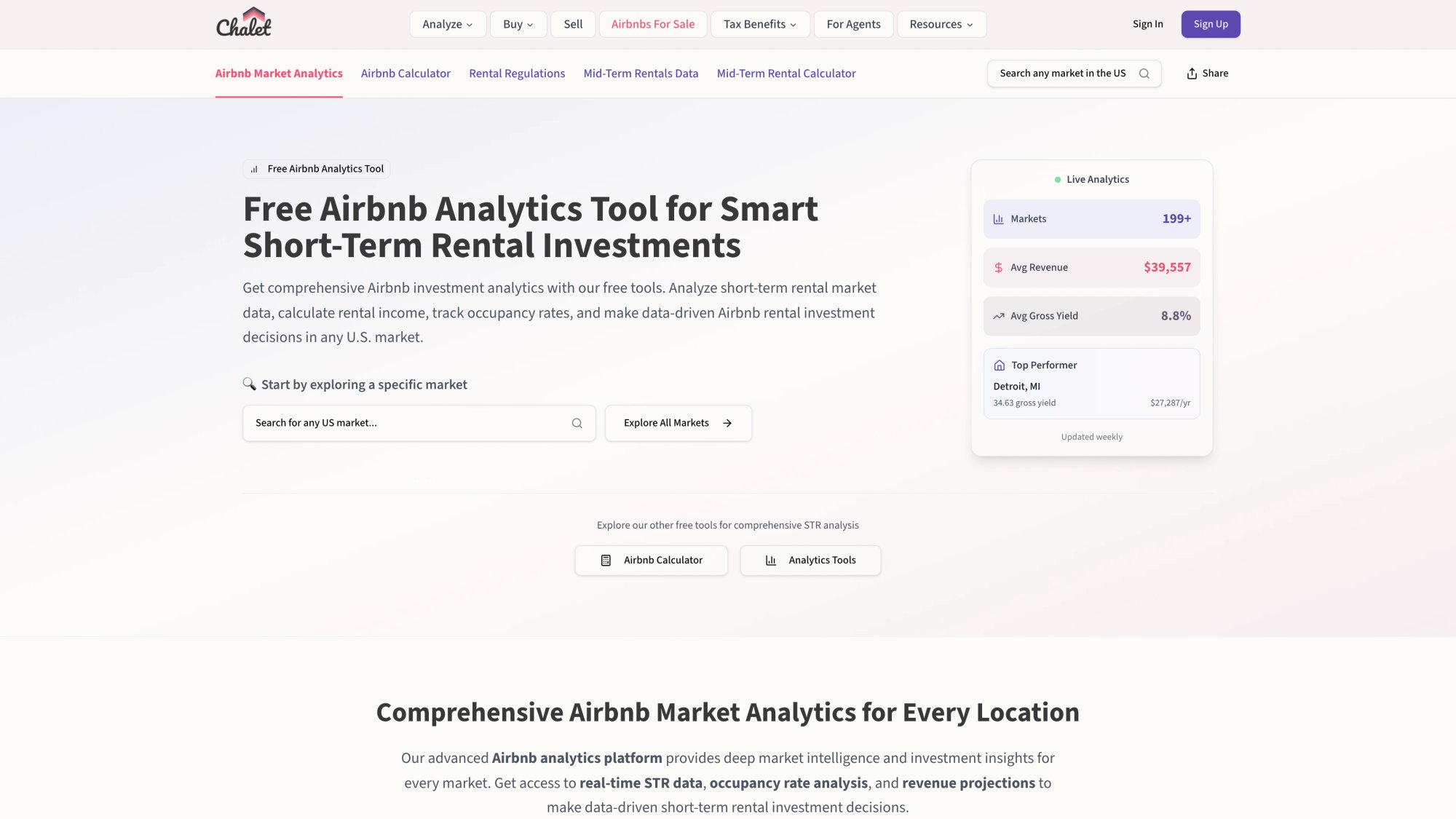
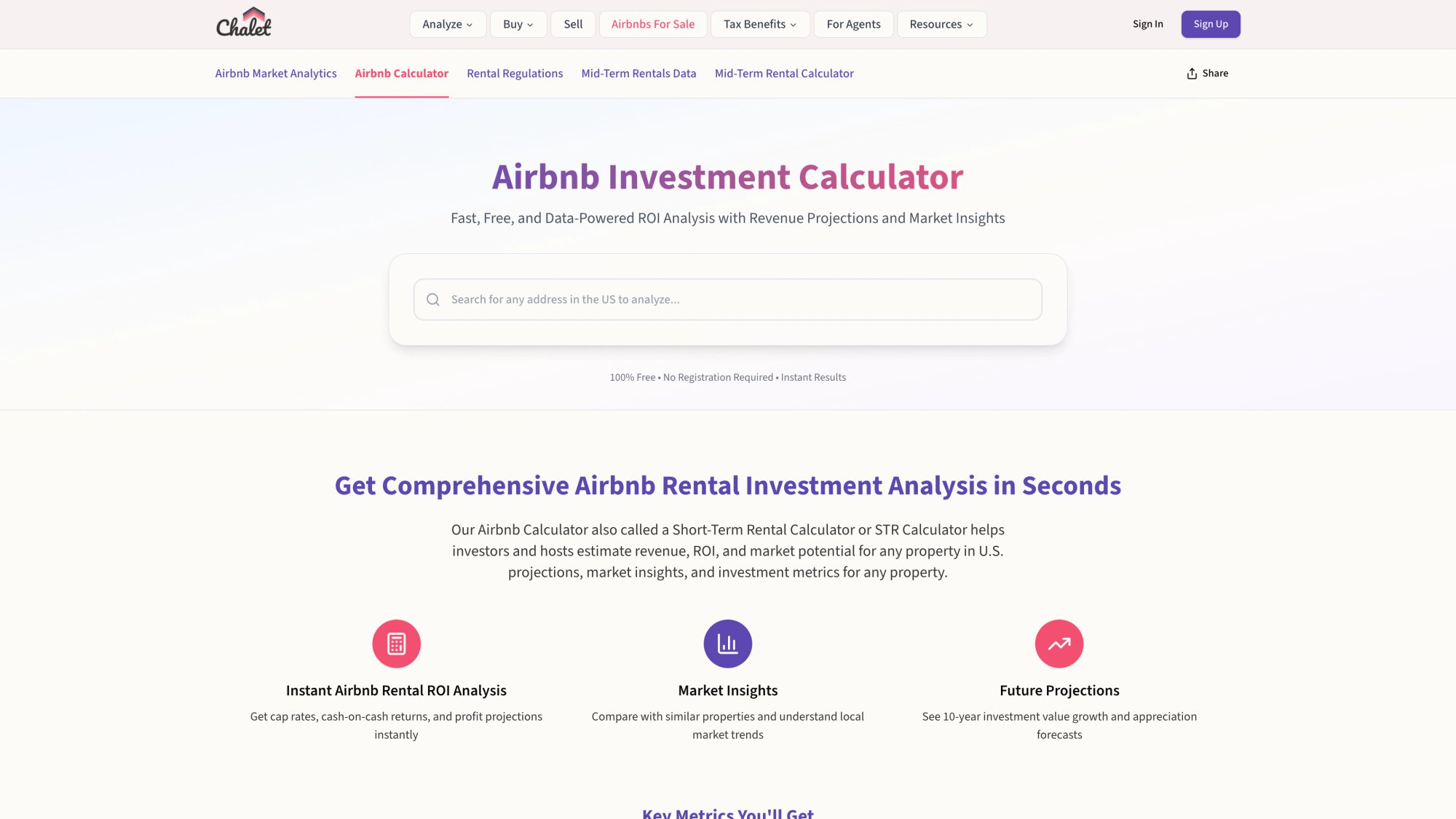
Use Chalet's free market dashboards to analyze ADR, occupancy, and revenue trends across multiple cities. Our ROI calculator lets you model cash flow under different management scenarios.
STR Operations Directory
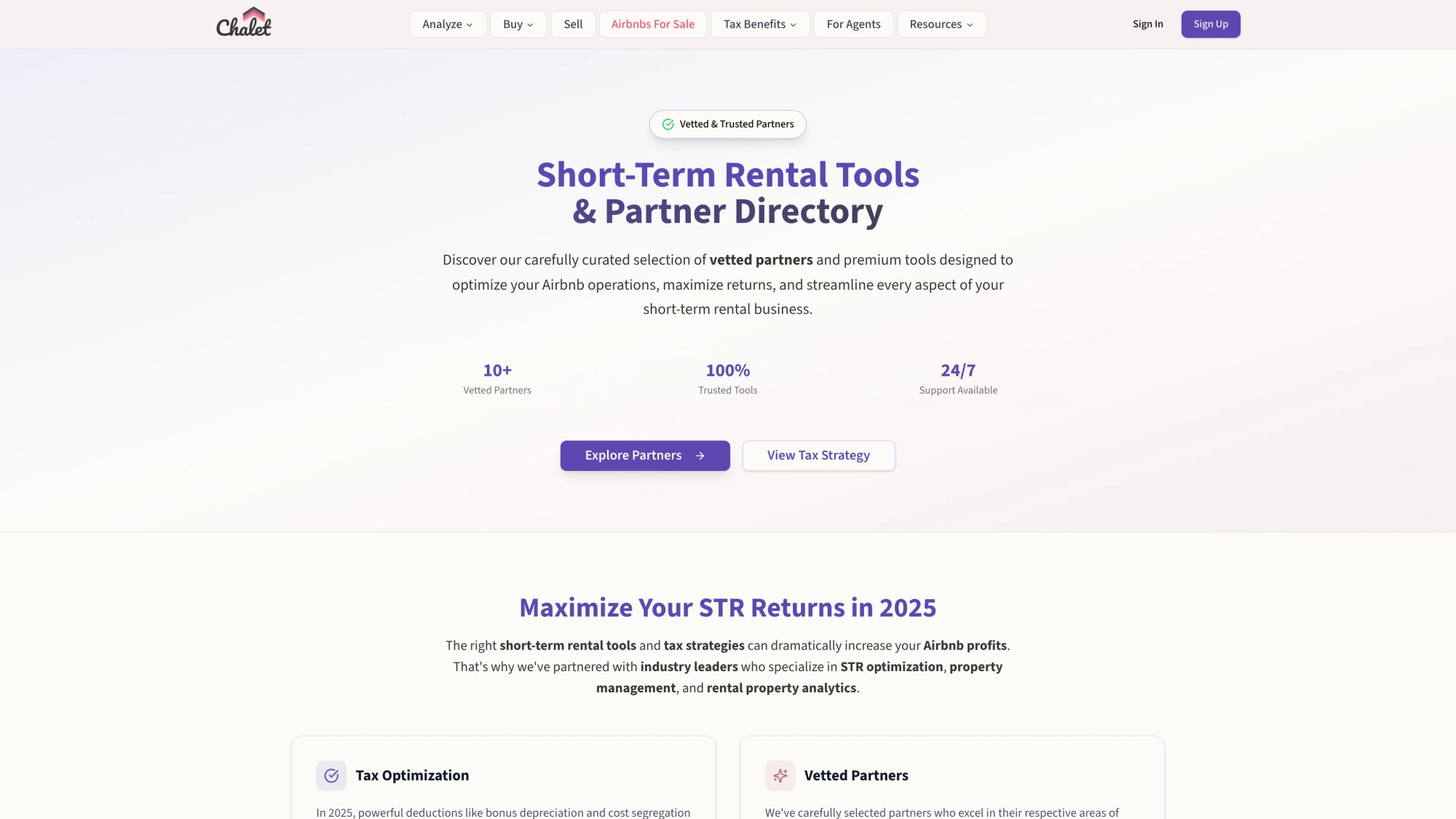
Access our curated STR Directory featuring vetted tools for pricing, cleaning, insurance, furnishing, and more. We've done the research so you don't have to test every vendor yourself.
Local Regulation Guidance
Check local STR regulations to understand permit requirements, occupancy rules, and local contact mandates before you buy.
For Those Hiring Managers
Vetted Property Management Network
Chalet connects you with top-rated Airbnb property management companies in many markets. We help you find firms with proven track records, transparent pricing, and strong performance metrics.
For All Investors
Expert Real Estate Agent Network
Whether you're buying your first STR or executing a 1031 exchange, work with agents who understand short-term rental investing. Meet an Airbnb-friendly agent through Chalet's network.
One-Stop Platform
From research to ROI analysis to connecting with vendors, Chalet pairs free analytics with the professionals you'll actually need so your STR investment moves from research to reality with fewer hand-offs.
The Most Overlooked Factor: Your Market Might Require Local Support
Some places allow self-management but require a local agent/contact for emergencies.
Example: Chalet's NYC regulation guide states that hosts may self-manage but must designate a local agent (NYC address + phone) for emergency response.
Lesson: Before you decide "self-manage," check your city's rules. Many markets have similar requirements that effectively mean you need some form of local presence, even if you're the primary operator.
Check local regulations in your target market before finalizing your management decision.
What Would Make This Guide "Worth $10k" to You
If you're serious about returns, don't stop at "self-manage vs PM." Do these three things:
1. Treat Management Like Underwriting
When you analyze a deal, model two scenarios:
• "Pro-managed fees" scenario
• "Hybrid/self-managed" scenario
Your purchase price should make sense under both, or you're taking hidden risk.
2. Separate Labor from Strategy
The highest leverage work is pricing + positioning + standards.
The most exhausting work is turnovers + small fixes.
Hybrid wins because it separates those.
3. Build an Exit Plan Before You Start
Whether you self-manage or hire a PM, decide now:
• What metrics trigger a change
• What vendors you'll replace first
• How you'll take back control of the listing if needed
Frequently Asked Questions
How much does an Airbnb property manager typically cost?
Full-service Airbnb property managers typically charge 20-35% of monthly revenue in most U.S. markets. Some premium services charge up to 40%, while half-service options like Evolve charge around 10%. Always clarify what the fee covers (cleaning, maintenance coordination, restocking) and what's charged separately.
Can I self-manage an Airbnb remotely?
Yes, but it requires assembling a reliable local team. You'll need trustworthy cleaners, handymen for repairs, and someone who can respond to on-site emergencies. Many remote self-managers use co-hosts or local runners for physical tasks while they handle pricing, messaging, and strategy remotely. Check if your market requires a designated local contact.
What's the difference between a co-host and a property manager?
A co-host is typically an individual who assists with specific tasks (messaging, check-ins, turnovers) for a lower fee or percentage, usually giving you more control and flexibility. A property manager is a company that handles full-service operations end-to-end, taking more control but also more responsibility. Co-hosts often deliver more personal service, while managers offer more comprehensive systems and scalability.
How do I know if my property manager is performing well?
Track these metrics in your first 90 days: response time and guest sentiment, review rating trend, occupancy and ADR versus local comps, maintenance resolution time, and refund/discount dollars. Also verify they're conducting photo-based cleaning inspections. If performance lags behind market benchmarks or you're seeing frequent guest complaints, that's a red flag.
What tools do I need to self-manage an Airbnb effectively?
Essential tools include: a channel manager or PMS (Guesty, Hostaway, Hospitable) to centralize bookings, dynamic pricing software (PriceLabs, Beyond Pricing), automated messaging for guest communication, smart locks for self check-in, and a scheduling system for cleaners. Chalet's STR Directory provides vetted recommendations for each category.
Can I switch from self-managing to hiring a manager later?
Absolutely. Many successful hosts start by self-managing for 6-12 months to learn operations, then hire a manager when they buy additional properties or their time becomes more valuable. The benefit of starting with self-management is you'll know exactly what a good manager should do, making you better equipped to vet and hold them accountable.
What should I look for in a property management contract?
Key clauses to examine: termination terms (can you exit in 30-60 days?), ownership of the listing and reviews, reserve account rules, repair approval thresholds, guest refund policies, and exclusivity/channel control. Also clarify if they'll use property management software that could trigger Airbnb's single-fee structure (affecting your payouts).
How does Airbnb's fee structure change affect property management?
Airbnb transitioned many hosts to a single-fee structure in 2025, especially those using property management software. Under single-fee, the host pays 14-16% (typically 15.5%) instead of the traditional split-fee where guests paid most. If your manager uses PMS software, ask how they're adjusting your nightly rates to account for this higher fee deduction from your payout.
Is it better to self-manage my first Airbnb or hire a manager from day one?
For first-time STR buyers who are local or semi-local, self-managing for 60-120 days is often the best path. You'll learn pricing, guest behavior, and operational challenges firsthand, making you a smarter investor. If you're remote, have a demanding job, or are doing a 1031 exchange with tight timelines, hiring a manager (or at minimum a local co-host) from day one might be necessary.
How much time does self-managing an Airbnb actually take?
For a single property, expect 5-10 hours per week on average, though it varies by season and occupancy. This includes guest messaging (1-2 hours), coordinating turnovers, monitoring pricing, handling occasional maintenance, and managing bookings. The mental load of being "always on" is often more taxing than the actual hours. Using automation tools can reduce active time to 3-5 hours per week.
What's the biggest mistake people make when choosing between self-managing and hiring a manager?
The biggest mistake is comparing a property manager's fee to $0. Self-management isn't free. It costs your time, requires local help (cleaners, handymen), demands software tools, and includes the cost of your mistakes. The right comparison is: management fee + oversight time versus your time + local help + tools + mistakes. Run both scenarios with real numbers using Chalet's calculator.
Can I use a hybrid approach with an Airbnb co-host?
Yes, and it's often the sweet spot. You can handle pricing, strategy, and guest messaging while a local co-host manages turnovers, inspections, and emergencies. Airbnb allows flexible co-host payout structures (percentage of booking, percentage of cleaning fee, or fixed per reservation), so you can design incentives that match the work. This gives you control over profit levers while outsourcing physical labor.
Finding the Right Balance for Your Airbnb Investment
Both self-management and professional management have clear advantages, and what's "right" can differ even from one property to another.
If you cherish personal control, have the time, and want to maximize profit, self-managing your Airbnb can be immensely rewarding and cost-effective.
If you're time-strapped, far away, or prefer a passive investment, a property manager can turn your rental into a mostly hands-off income stream. Just be sure to budget for their fee and choose a reputable firm.
Some of the most successful hosts actually combine strategies: they self-manage until it no longer makes sense, use co-hosts or partial services to fill gaps, and use plenty of tech along the way.
The good news is that today's STR landscape offers more flexibility than ever. Independent hosts are empowered with tools and support to go it alone, while quality managers are evolving to provide more customized service where needed.
Your Airbnb rental is a significant investment. Manage it in the way that best aligns with your lifestyle and financial goals, and don't hesitate to adjust as you gain experience in the ever-evolving short-term rental space.
Next Steps
Ready to move forward? Choose your path:
• Analyze a deal: Chalet's Airbnb Calculator
• Benchmark a market: Market Analytics
• Check local rules: STR Regulations
• Build your ops stack: STR Directory
• Find a property manager: Property Management Network
• Connect with an agent: Airbnb-Friendly Real Estate Agents