


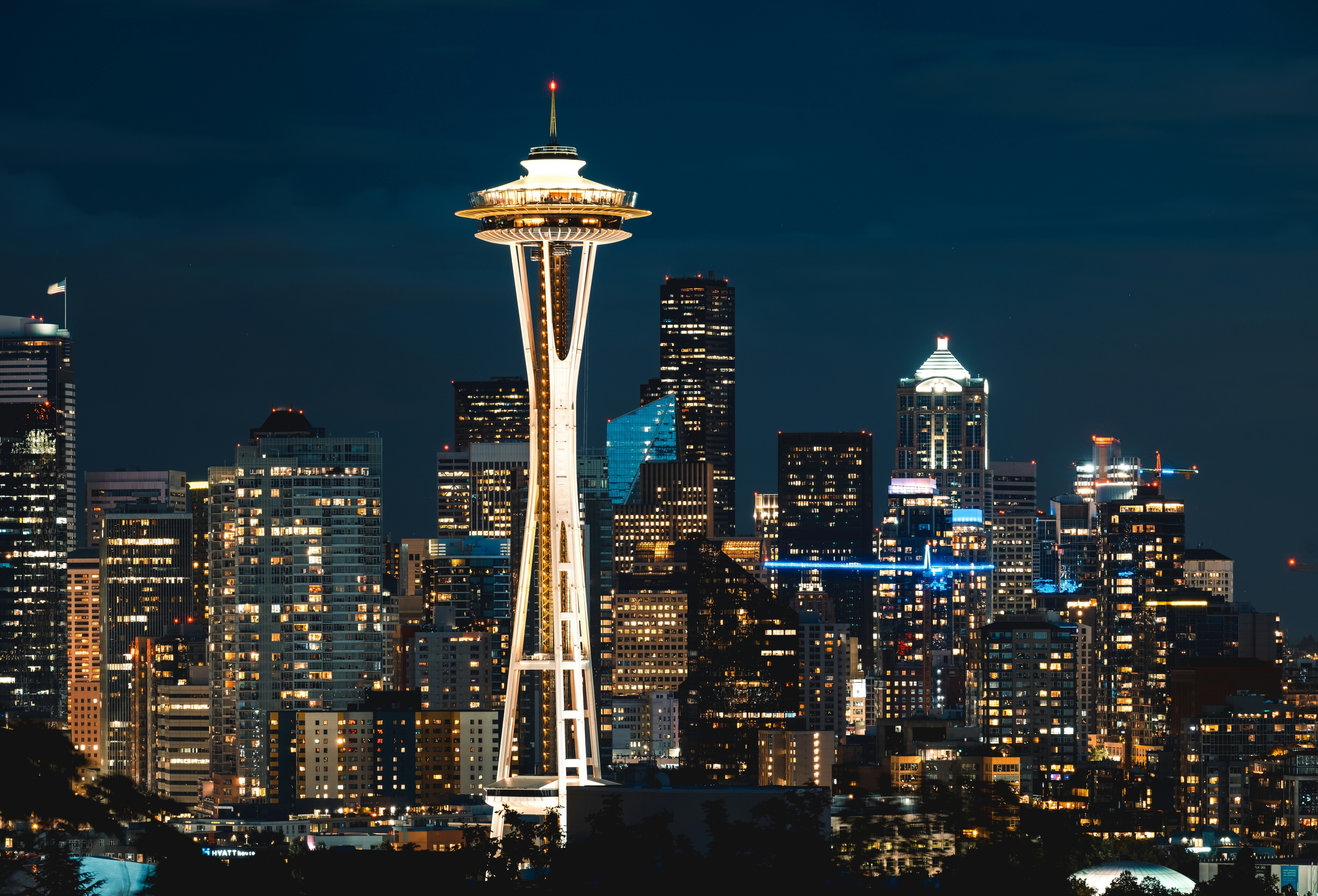
This guide covers only the City of Seattle, Washington. Neighboring markets have separate STR rules and are often confused with Seattle:
- Bellevue: Separate STR licensing, generally less restrictive than Seattle’s primary residence rule.
- Kirkland: Distinct municipal code and permit process; not governed by Seattle’s STR ordinance.
- Redmond: Own STR regulations and enforcement; different from Seattle’s requirements.
- Shoreline: Separate city with its own STR rules; not covered by Seattle’s code.
Legality Verdict
Short-term rentals are legal in Seattle with a strict two-unit cap (one must be your primary residence), annual licensing, and a high total tax stack. Enforcement is proactive, with platform monitoring and escalating fines for violations.
- Legality Status: 4/5
- License Availability: 4/5
- Compliance Cost (% revenue): 3/5
- Regulatory Stability: 3/5
- Enforcement Climate: 2/5
TL;DR
Seattle defines STRs as rentals under 30 nights and requires a Short-Term Rental Operator License ($75/unit/year), plus a business license. The total tax stack includes 7% hotel/motel tax and state/local sales taxes. Most hosts are capped at two units, with one as their primary residence. Enforcement is strict, with platform cross-checks and $500–$1,000 fines for violations. The biggest gotcha: non-primary residence STRs face extra scrutiny and registration requirements.
Quick Facts
| Item | Detail |
|---|---|
| STR Definition | Rental of a home or part of a home for fewer than 30 consecutive nights Seattle Department of Construction & Inspections (SDCI) |
| Registration Required | Yes — Short-Term Rental Operator License City of Seattle Business Regulations |
| Permit Cost | $75 per unit, per year Seattle Services Portal Help Center |
| Annual Renewal | Yes, every 12 months City of Seattle Business Regulations |
| State Sales Tax | 6.5% Washington Department of Revenue |
| Local Sales Tax | Varies by city/county Washington Department of Revenue |
| Total Effective Lodging Tax | 7% hotel/motel lodging tax (city) [Washington State Short Term Rental Tax (2026): Rates & Filing Guide |
| King County Convention Tax | Applies to all lodging since Jan 1, 2019 Washington Department of Revenue |
| State B&O Tax | 0.471% of gross revenue Washington Department of Revenue |
| Business License Required | Yes, City of Seattle business license tax certificate City of Seattle Business Regulations |
| License Cap | Yes — max 2 units per operator; one must be primary residence Seattle Services Portal Help Center |
| Primary Residence Rule | Yes, if operating two units, one must be your primary residence Seattle Services Portal Help Center |
| Transferability | Not transferable; new owner must apply Seattle Services Portal Help Center |
| Inspection Requirement | Secondary units (not primary residence) must register with RRIO [Short-Term Rentals – SDCI |
| Local Contact Requirement | Yes, must post local contact number in unit Checkmate Rentals |
| Occupancy Cap | Not codified — no separate citywide maximum occupancy Seattle Department of Construction & Inspections (SDCI) |
| Parking Requirement | Not codified — no separate citywide parking rule Seattle Department of Construction & Inspections (SDCI) |
| Density Limit | Not codified — no citywide density cap; see enforcement for area-specific proposals Seattle Department of Construction & Inspections (SDCI) |
| HOA/Condo Override | Not codified — private covenants may apply Seattle Department of Construction & Inspections (SDCI) |
| Enforcement Penalties | $500 first violation, $1,000 subsequent Truvi Seattle Short-Term Rental Laws and Licenses |
| Insurance Requirement | $1,000,000 liability insurance per RCW 64.37.050 Secord Insurance Agency, Seattle, WA |
| Last Updated | August 4, 2026 |
Regulatory Impact Snapshot
Seattle’s STR regime imposes a high compliance burden: annual licensing ($75/unit), mandatory business license, and a total tax stack exceeding 13% when state, local, and hotel taxes are combined. Non-primary residence units require RRIO registration and face extra scrutiny. Underwriters should model compliance costs at 14.1% of gross revenue, with median Seattle STRs earning $34,205 at an average daily rate of $170 and 46% occupancy. The binding constraint is the two-unit cap and primary residence rule, which sharply limits portfolio scaling. Run this market in our Airbnb Calculator →
Top 500 US Airbnb Rental Markets - 2026
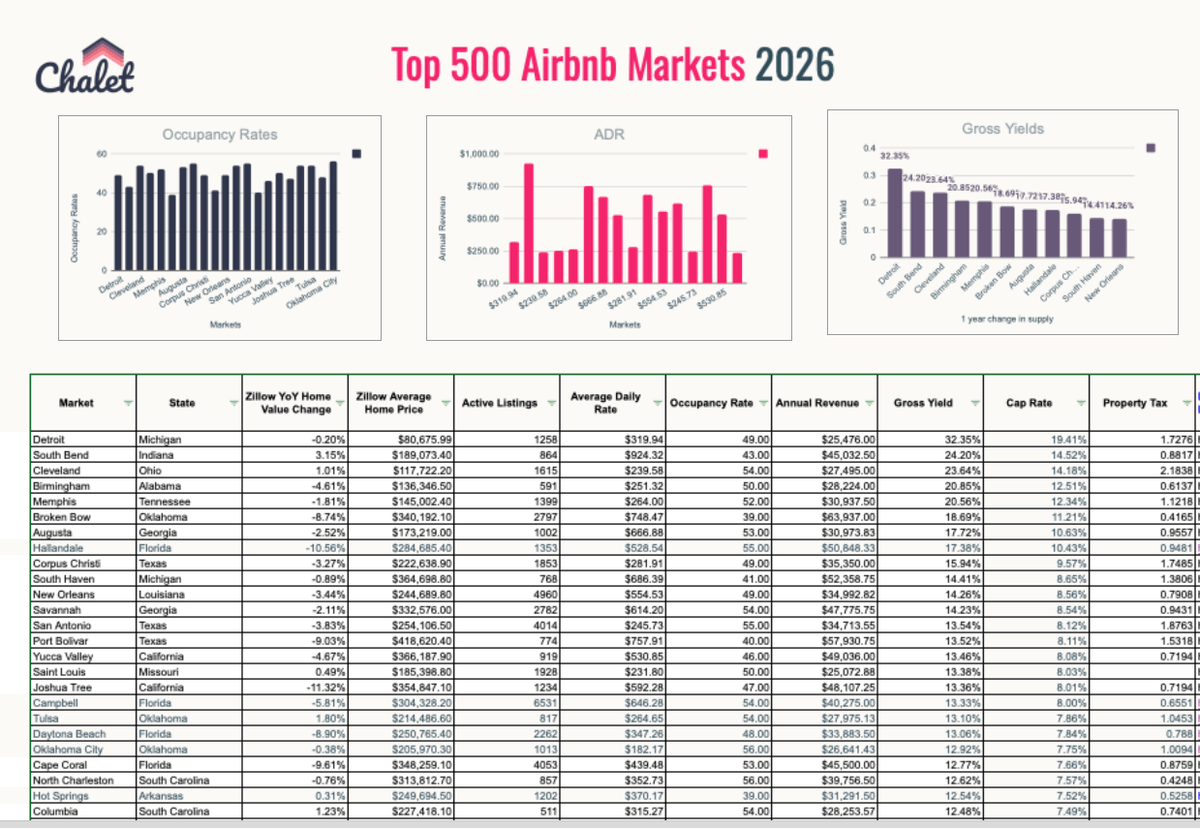
Instantly compare top 500 short-term (Airbnb) rental markets in the US
Frequently Asked Questions
Basics
What is considered a short-term rental in Seattle?
A short-term rental is any home or part of a home rented for fewer than 30 consecutive nights Seattle Department of Construction & Inspections (SDCI).
Are short-term rentals legal in Seattle?
Yes, STRs are legal with a valid operator license and compliance with city rules City of Seattle Business Regulations.
Does Seattle’s STR ordinance apply to all neighborhoods?
Yes, but some neighborhoods may face additional restrictions or proposed density caps Comparent Seattle Airbnb & STR Regulations 2026.
Licensing
Do I need a license to operate an Airbnb in Seattle?
Yes, a Short-Term Rental Operator License is required for each unit City of Seattle Business Regulations.
How much does the STR license cost?
$75 per unit, per year Seattle Services Portal Help Center.
Is a business license also required?
Yes, you must obtain a City of Seattle business license tax certificate City of Seattle Business Regulations.
Can I transfer my STR license if I sell my property?
No, licenses are not transferable; new owners must apply Seattle Services Portal Help Center.
Taxes
What taxes apply to Seattle short-term rentals?
State sales tax (6.5%), local sales tax, 7% hotel/motel lodging tax, King County Convention and Trade Center Tax, and B&O tax Washington Department of Revenue.
Does Airbnb collect and remit taxes for me?
Yes, Airbnb collects and remits state/local sales tax, hotel/motel, and convention taxes for Seattle hosts Washington Department of Revenue.
Do I still need to register with the Department of Revenue?
Yes, hosts must register and report rental income, even if a platform collects taxes Washington Department of Revenue.
What is the B&O tax rate for STRs?
0.471% of gross revenue, after any small business credit Washington Department of Revenue.
Operations
How many STR units can I operate in Seattle?
Most hosts are limited to two units, with one as their primary residence Seattle Services Portal Help Center.
Are there inspection requirements?
Yes, secondary units (not your primary residence) must register with RRIO and may be inspected Short-Term Rentals – SDCI | seattle.gov.
Is there a local contact requirement?
Yes, you must post a local contact number in the unit Checkmate Rentals.
Are there occupancy or parking limits?
No separate citywide occupancy or parking caps are codified Seattle Department of Construction & Inspections (SDCI).
Enforcement
How is STR compliance enforced in Seattle?
The city proactively monitors platforms and cross-checks licenses; unlicensed operators face fines and removal Comparent Seattle Airbnb & STR Regulations 2026.
What are the penalties for operating without a license?
$500 for the first violation, $1,000 for subsequent violations Truvi Seattle Short-Term Rental Laws and Licenses.
Can my listing be removed from Airbnb or VRBO?
Yes, platforms are required to verify license status and may suspend unlicensed listings URPM Seattle STR Permit Guide.
Is insurance required?
Yes, $1,000,000 in liability insurance per RCW 64.37.050 Secord Insurance Agency, Seattle, WA.
Permit Process
Seattle requires both a Short-Term Rental Operator License and a City business license tax certificate before listing any unit for fewer than 30 nights. The STR license costs $75 per unit, renewed annually. Secondary units (not your primary residence) must also register with the Rental Registration and Inspection Ordinance (RRIO) program and may be subject to inspection. License numbers must be posted on all listings in the required format.
Zoning
STRs are allowed in most residential zones, but the city prohibits rentals in non-dwelling spaces and certain shoreline areas. Most operators may run up to two units, with one as their primary residence. No citywide occupancy, parking, or density caps are codified, but private HOA or condo rules may further restrict STR use. For address-specific zoning questions, consult the Seattle Department of Construction & Inspections.
Taxes and Remittance
Seattle STRs are subject to a 6.5% state sales tax, local sales tax, a 7% city hotel/motel lodging tax, and the King County Convention and Trade Center Tax. The state B&O tax (0.471%) also applies. Airbnb and similar platforms collect and remit most taxes, but hosts must still register with the Department of Revenue and file excise tax returns, claiming deductions for taxes collected by facilitators.
Enforcement and Recent Actions
Seattle’s enforcement is proactive: city agencies cross-reference platform listings with license databases, and platforms must verify license status before allowing listings. Fines start at $500 for unlicensed operation and escalate to $1,000. Multiple substantiated complaints can lead to license suspension or revocation. The city strictly enforces the primary residence rule and requires operators to post a Good Neighbor Agreement in each unit.
Recent Changes and Pending Legislation
In 2024, Seattle increased enforcement and considered neighborhood-specific density caps, especially in high-demand areas like Capitol Hill. As of early 2025, these proposals remained in committee and were not enacted. The city may further restrict non-primary residence STRs in the future, so investors should monitor for updates and verify current caps with city offices.
Comparable Markets
- Bellevue, WA: Consider if you want fewer primary residence restrictions.
- Portland, OR: Consider for a similar urban STR regime with different enforcement.
- Tacoma, WA: Consider for lower permit costs and less restrictive caps.
- Spokane, WA: Consider for a more permissive STR environment.
Sources
- Seattle Department of Construction & Inspections (SDCI): https://www.seattle.gov/sdci/codes/common-code-questions/short-term-rentals
- City of Seattle Business Regulations: https://www.seattle.gov/business-regulations/short-term-rentals
- Seattle Services Portal Help Center: https://seattlegov.zendesk.com/hc/en-us/articles/360033892933-How-do-I-apply-for-a-Short-term-Rental-Operator-s-License
- Washington Department of Revenue: https://dor.wa.gov/education/industry-guides/lodging-guide/personal-home-rentals
- Washington Department of Revenue: https://dor.wa.gov/education/industry-guides/lodging-guide/lodging-taxes
- Washington Department of Revenue: https://dor.wa.gov/forms-publications/publications-subject/tax-topics/airbnb-collect-and-send-taxes-behalf-hosts
- Short-Term Rentals – SDCI | seattle.gov: https://www.seattle.gov/sdci/codes/common-code-questions/short-term-rentals
- Secord Insurance Agency, Seattle, WA: https://secordagency.com/news/2026/05/washington-vacation-rental-insurance-what-hosts-should-know/
- Comparent Seattle Airbnb & STR Regulations 2026: https://regulations.comparent.com/regulations/washington/seattle/
- Truvi Seattle Short-Term Rental Laws and Licenses: https://truvi.com/blog/seattle-airbnb-laws/
- URPM Seattle STR Permit Guide: https://www.ubrpm.com/blog/operations/seattle-short-term-rental-permit-regulations-guide-2026
- Checkmate Rentals: https://www.checkmaterentals.com/blog/washington-short-term-rental-laws
- Washington State Short Term Rental Tax (2026): Rates & Filing Guide | Surge: https://www.gowithsurge.com/blog/washington-short-term-rental-tax
This page is research, not legal advice. Consult local counsel before acquiring or operating a short-term rental in City of Seattle, King County, Washington State.
Ready to evaluate Seattle as an STR market?
- See Seattle revenue data → — Get live median revenue, ADR, and occupancy for Seattle STRs.
- Run this deal in our calculator → — Model cash flow and compliance costs for any Seattle property.
- Match with a Seattle STR agent → — Connect with a local expert for on-the-ground guidance.