



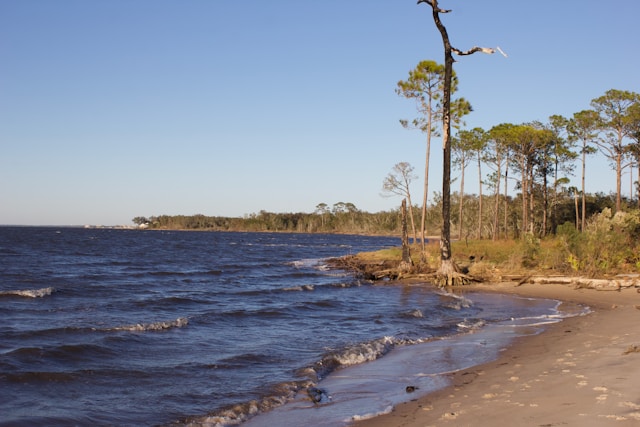
This guide covers short-term rental rules for the City of Pensacola, Florida. If you are researching nearby markets, see:
- Pensacola Beach: Unincorporated Escambia County, with county and Santa Rosa Island Authority oversight; different STR rules and registration.
- Gulf Breeze: Separate incorporated city in Santa Rosa County, with its own local ordinances and enforcement.
- Milton: Distinct city in Santa Rosa County, not governed by Pensacola or Escambia County STR rules.
Legality Verdict
Short-term rentals are legal in Pensacola, FL, subject to state licensing and a city business license. No city-level permit cap or moratorium exists, but operators must comply with state and county tax and safety rules. The main investor risk is future state preemption changes.
- Legality Status: 4/5
- License Availability: 4/5
- Compliance Cost (% revenue): 3/5
- Regulatory Stability: 3/5
- Enforcement Climate: 4/5
TL;DR
Pensacola defines short-term rentals as accommodations rented for six months or less. Operators must obtain a Florida DBPR vacation rental license and a city Business Tax Receipt. The total lodging tax is 11% (6% state, 5% county). No city permit cap or density limit exists, but zoning and HOA restrictions may apply. The biggest gotcha: Airbnb/VRBO only remit state tax—hosts must directly remit the 5% county TDT themselves.
Quick Facts
| Item | Detail |
|---|---|
| STR Definition | Rental of living quarters for six months or less Escambia County Clerk of Courts |
| Registration Required | Yes — City Business Tax Receipt + Florida DBPR license City of Pensacola |
| Permit Cost | [needs verification — call City Business Tax Receipt Department at (850) 436-5693 or check https://www.cityofpensacola.com/658/Business-Taxes] |
| Annual Renewal | Yes — Florida DBPR license must be renewed annually; city business license renewal required DBPR |
| State Sales Tax | 6% STR Search |
| County Tourist Development Tax | 5% Escambia County Clerk of Courts |
| City Accommodations Tax | Not codified — no separate city-level accommodations tax Visit Pensacola |
| Total Effective Lodging Tax | 11% (6% state + 5% county TDT) Escambia County Clerk of Courts |
| License Cap | Not codified — no city cap on STR licenses City of Pensacola |
| Occupancy Cap | Not codified — state default: 2 persons/bedroom + 2/unit Greater Pensacola Property Management |
| Minimum Night Stay | Not codified — no city rule City of Pensacola Code of Ordinances |
| Parking Requirement | Not codified — no city rule City of Pensacola Code of Ordinances |
| Primary Residence Rule | Not codified — no city rule City of Pensacola Code of Ordinances |
| HOA/Condo Override | Not codified — private covenants may apply City of Pensacola Code of Ordinances |
| Inspection Requirement | Not codified — state requires balcony inspection every 3 years if applicable Greater Pensacola Property Management |
| Transferability | Not codified — confirm with city City of Pensacola |
| Enforcement Penalties | Not codified — state penalties for unlicensed operation Minut |
| Last Updated | May 22, 2026 |
Regulatory Impact Snapshot
Pensacola STR investors must budget for both state and county taxes, plus licensing. The total lodging tax stack is 11%. City permit and renewal fees are not codified in public sources and require direct confirmation. Underwriters should model compliance costs at 11.0% of gross revenue, with median Pensacola, FL STRs earning $30,973 at an average daily rate of $186 and 50% occupancy. The binding constraint is the requirement to directly remit the 5% county TDT, as platforms do not collect it. Zoning and HOA restrictions may further limit operations. Run this market in our Airbnb Calculator →
Top 500 US Airbnb Rental Markets - 2026
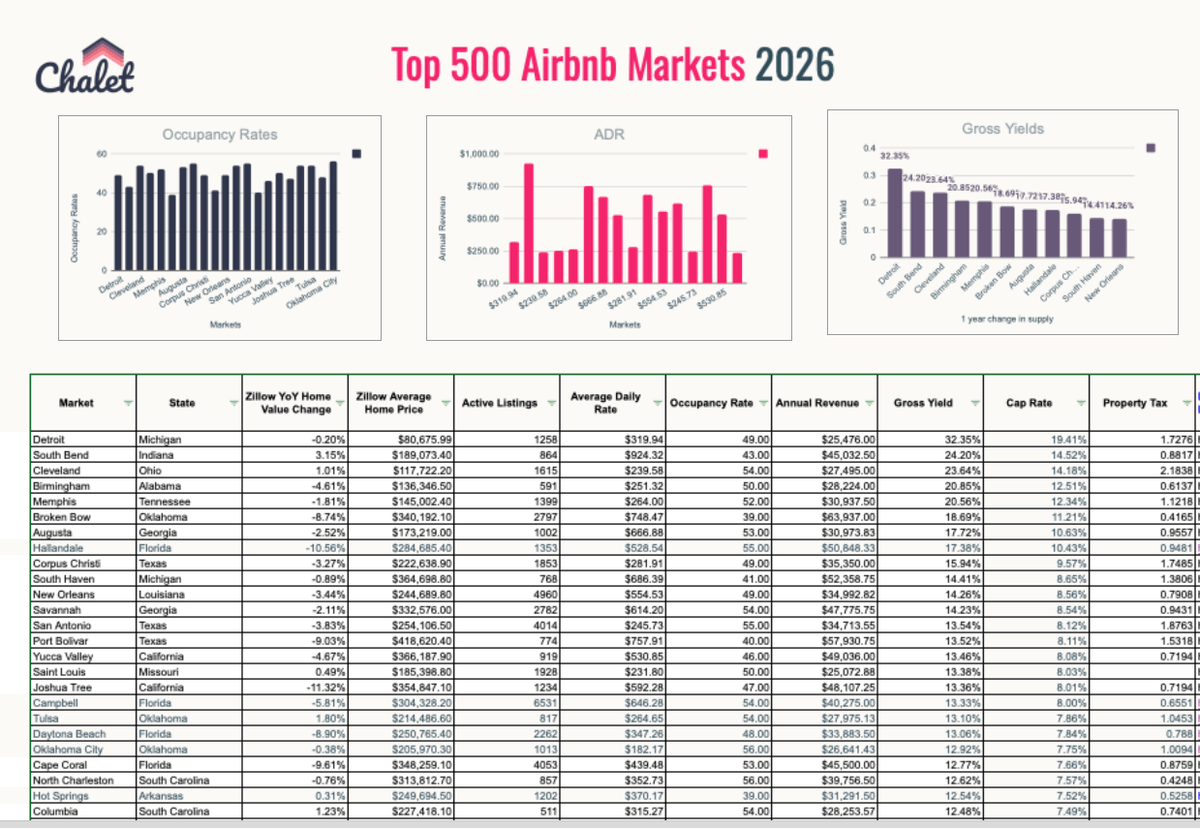
Instantly compare top 500 short-term (Airbnb) rental markets in the US
Frequently Asked Questions
Basics
What is considered a short-term rental in Pensacola, FL?
A short-term rental is any rental of living quarters or accommodations for six months or less Escambia County Clerk of Courts.
Are short-term rentals legal in Pensacola?
Yes, STRs are legal with a Florida DBPR license and a city Business Tax Receipt City of Pensacola.
Does Pensacola have a moratorium or cap on STRs?
No, there is no city-level cap or moratorium on STRs as of May 2026 City of Pensacola.
Licensing
What licenses are required to operate an STR in Pensacola?
You need a Florida DBPR vacation rental license and a Pensacola Business Tax Receipt City of Pensacola.
How much does the Pensacola STR license cost?
[needs verification — call City Business Tax Receipt Department at (850) 436-5693 or check https://www.cityofpensacola.com/658/Business-Taxes]
Is the STR license transferable if I sell my property?
Not codified — confirm with the city Business Tax Receipt Department City of Pensacola.
How often do I need to renew my STR license?
Florida DBPR licenses and city Business Tax Receipts must be renewed annually DBPR.
Taxes
What taxes apply to Pensacola short-term rentals?
STRs are subject to 6% Florida state sales tax and 5% Escambia County TDT, totaling 11% Escambia County Clerk of Courts.
Does Airbnb or VRBO collect all required taxes?
No, they collect the 6% state tax but not the 5% county TDT; hosts must remit the TDT directly Airbnb Help Center.
How do I register to remit the county TDT?
Register with the Escambia County Clerk of Courts before accepting bookings Escambia County Clerk of Courts.
Operations
Is there a minimum night stay for STRs in Pensacola?
No, the city does not codify a minimum night stay requirement City of Pensacola Code of Ordinances.
Are there occupancy limits for STRs?
State default applies: two persons per bedroom plus two additional per unit Greater Pensacola Property Management.
Are there parking or local contact requirements?
No city-specific rules; defaults apply City of Pensacola Code of Ordinances.
Do HOA or condo rules override city STR rules?
Yes, private covenants may further restrict STRs City of Pensacola Code of Ordinances.
Enforcement
What are the penalties for operating without a license?
State penalties apply, including fines and possible removal of listings Minut.
How is STR enforcement handled in Pensacola?
Enforcement is primarily state-driven, with local oversight on zoning and business licensing Avantio.
Do I need to display my license number in ads?
Yes, Florida law requires your DBPR license, sales tax, and TDT account numbers in all ads LegalClarity.
Permit Process
Pensacola requires STR operators to obtain a Business Tax Receipt (business license) from the city. Before applying, you must secure a Florida DBPR vacation rental license. The DBPR license application includes a one-time $50 processing fee, plus a variable license fee based on the number of units. Both licenses must be renewed annually, and the city does not cap the number of STR licenses issued City of Pensacola.
Zoning
Pensacola does not separately codify zoning districts for STRs in its ordinances. There are no city-level density limits, minimum night stays, or parking requirements for STRs. However, private HOA or condo covenants may impose additional restrictions, and state occupancy limits apply by default. Investors should confirm zoning with the city Planning & Zoning office if uncertain City of Pensacola Code of Ordinances.
Taxes and Remittance
Pensacola STRs are subject to an 11% lodging tax stack: 6% Florida state sales tax and 5% Escambia County Tourist Development Tax (TDT). Airbnb and VRBO collect and remit only the state tax; hosts must register with the county and remit the TDT directly. Registration with the Florida Department of Revenue and the Escambia County Clerk of Courts is required before accepting bookings Escambia County Clerk of Courts.
Enforcement and Recent Actions
Enforcement is primarily state-driven, focusing on licensing, tax compliance, and safety. The city does not codify specific STR penalties, but operating without a DBPR license is unlawful and subject to fines or listing removal. Florida law requires license numbers in all advertisements, and platforms must verify these quarterly. Local governments retain authority over zoning and business licensing Minut.
Recent Changes and Pending Legislation
In June 2024, Florida’s governor vetoed SB 280, which would have centralized STR regulation and limited local control. As a result, Pensacola remains under the previous framework, with local governments retaining authority over zoning, registration, and enforcement. However, ongoing political debate means future state preemption or registration changes remain a risk for investors Avantio.
Comparable Markets
- Destin, FL: Consider if you want a panhandle market with explicit STR zoning and higher ADRs.
- Panama City Beach, FL: Consider for a larger, highly seasonal Gulf Coast market.
- Fort Walton Beach, FL: Consider for a nearby city with similar tax stack and licensing.
- Orlando, FL: Consider for a major metro with robust STR demand and more complex local rules.
Sources
- City of Pensacola, Florida Official Website – Code of Ordinances
- City of Pensacola, Florida Official Website – Business Taxes
- Escambia County Clerk of Courts
- Visit Pensacola (official DMO)
- DBPR Form HR 5025-753 2022 January
- City of Pensacola Code of Ordinances
- Greater Pensacola Property Management
- Pensacola City Limits Vs. Escambia County (Realty Masters of Florida)
- LegalClarity
- Beachside Vacation Rentals (2025 Guide)
- Minut
- Avantio
- Airbnb Help Center
- STR Search
This page is research, not legal advice. Consult local counsel before acquiring or operating a short-term rental in City of Pensacola, Escambia County, Florida.
Ready to evaluate Pensacola as an STR market?
- See Pensacola revenue data → — Get live ADR, occupancy, and revenue comps for underwriting.
- Run this deal in our calculator → — Model cash flow and compliance costs for any Pensacola property.
- Match with a Pensacola STR agent → — Connect with a local expert for on-the-ground guidance.