



This guide covers Seminole in Pinellas County, Florida. Nearby markets often confused with Seminole include:
- Largo: Adjacent city with its own STR rules and enforcement.
- St. Petersburg: Large neighboring city with stricter STR regulations and separate licensing.
- Clearwater: Popular tourist city with distinct STR ordinances and beach zones.
- Seminole (Seminole County): A different city in Central Florida, not in Pinellas County.
Legality Verdict
Short-term rentals are legal in Seminole, FL, governed by state law and city code. No city permit is required, but a Florida DBPR license and full tax compliance are mandatory. County-level rule changes are possible in 2026.
- Legality Status: 4/5
- License Availability: 5/5
- Compliance Cost (% revenue): 3/5
- Regulatory Stability: 3/5
- Enforcement Climate: 4/5
TL;DR
Seminole, FL defines STRs as rentals of less than one month, more than three times per year. No city permit is required, but a $230 annual Florida DBPR license is mandatory. The total tax stack is 13%. No city occupancy or parking rules are codified, but all guests must follow city nuisance and noise ordinances. The biggest gotcha: county-level noise and registration rules may tighten soon.
Quick Facts
| Item | Detail |
|---|---|
| STR Definition | Rental for less than one month, more than three times/year Suncoast Tampa Association of REALTORS® |
| Registration Required | Yes (Florida DBPR license) Florida DBPR Vacation Rental License (2026) |
| Permit Cost | $230/year (state: $170 license + $50 application + $10 HEP fee) Florida DBPR Vacation Rental License (2026) |
| Annual Renewal | Yes, $180/year (state: $170 license + $10 HEP fee) Florida DBPR Vacation Rental License (2026) |
| State Sales Tax | 6% LegalClarity |
| County Discretionary Surtax | 1% LegalClarity |
| County Tourist Development Tax | 6% Pinellas County Tax Collector |
| Total Effective Lodging Tax | 13% (state + county) LegalClarity |
| Local Accommodations Tax | Not codified — no separate city tax Pinellas County Tax Collector |
| Occupancy Cap | Not codified — no city rule identified in sources reviewed [Code of Ordinances |
| Parking Requirement | Not codified — no city rule identified in sources reviewed [Code of Ordinances |
| Inspection Requirement | Not codified — no city rule identified in sources reviewed [Code of Ordinances |
| HOA/Condo Override | Not codified — no city rule identified in sources reviewed [Code of Ordinances |
| Transferability | Not transferable; new owner must reapply Hotels and Restaurants – Guide to Vacation Rentals and Timeshare Projects – MyFloridaLicense.com |
| Enforcement Penalties | Up to $1,000/day (state DBPR) Florida Vacation Rental Laws 2026 |
| Primary Regulator | Florida DBPR (state license); City of Seminole (nuisance/code) |
| License Cap | Not codified — no city cap identified in sources reviewed [Code of Ordinances |
| Permitted Zones | Not codified — no city rule identified in sources reviewed [Code of Ordinances |
| Prohibited Zones | Not codified — no city rule identified in sources reviewed [Code of Ordinances |
| Last Updated | August 4, 2026 |
Regulatory Impact Snapshot
Seminole, FL investors face a straightforward compliance stack: a $230 annual state license, 13% total lodging tax, and no city-level permit or occupancy rules. Airbnb and VRBO collect most taxes, but hosts must register for state and county accounts for direct bookings. Underwriters should model compliance costs at 14.3% of gross revenue, with median Seminole, FL STRs earning $40,988 at an average daily rate of $304 and 44% occupancy. The binding constraint is the high tax stack and potential for new county noise or registration rules. Run this market in our Airbnb Calculator →
Top 500 US Airbnb Rental Markets - 2026
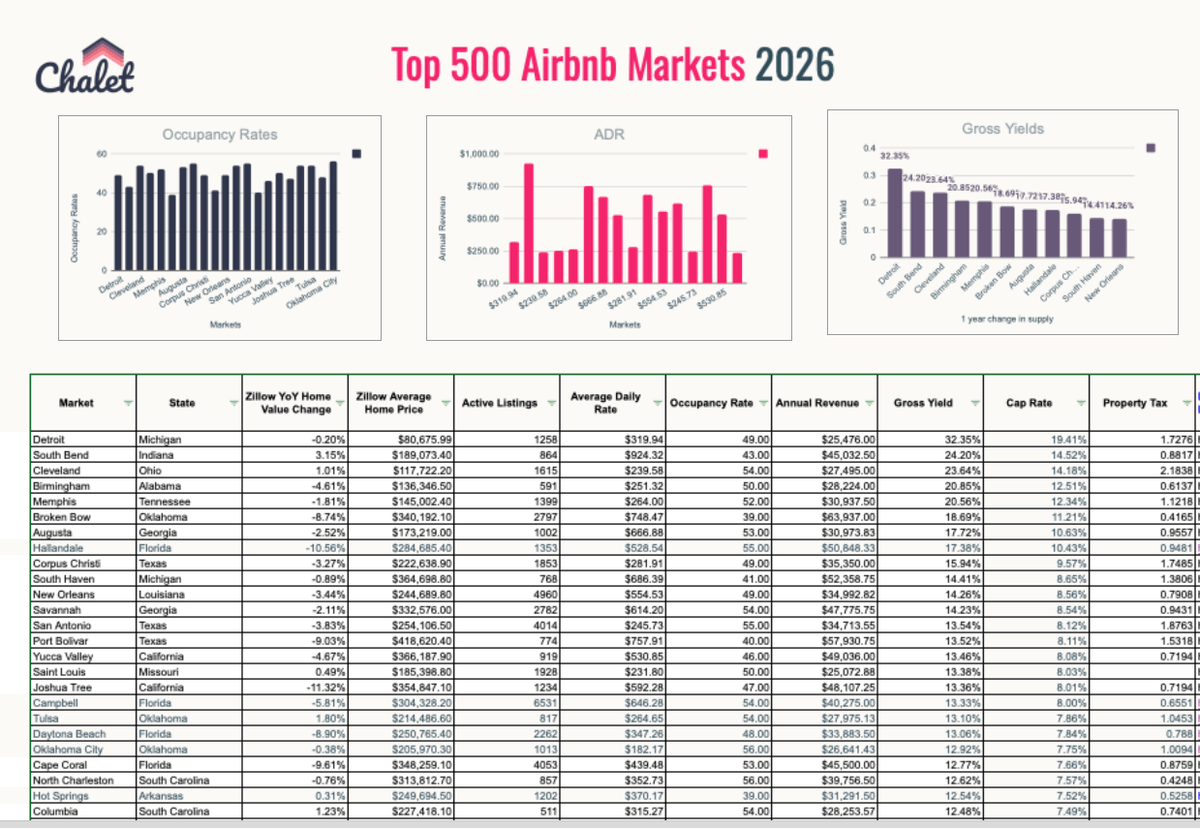
Instantly compare top 500 short-term (Airbnb) rental markets in the US
Frequently Asked Questions
Basics
What is considered a short-term rental in Seminole, FL?
A property rented for less than one month, more than three times in any twelve-month period, is considered a short-term rental Suncoast Tampa Association of REALTORS®.
Are short-term rentals legal in Seminole, FL?
Yes, STRs are legal if you comply with state licensing and tax requirements Florida DBPR Vacation Rental License (2026).
Does Seminole have its own STR ordinance?
No, Seminole does not have a separate STR ordinance; state law and city nuisance codes apply Code of Ordinances | Seminole, FL – Municode Library.
Licensing
Is a city permit required for STRs in Seminole?
No separate city permit is required; only a Florida DBPR license is mandatory Florida DBPR Vacation Rental License (2026).
How much does the Florida DBPR license cost?
$230 for the first year ($170 license, $50 application, $10 HEP fee); $180 for annual renewal Florida DBPR Vacation Rental License (2026).
How long does it take to get licensed?
Online applications are processed in 1–2 business days Hotels and Restaurants – Guide to Vacation Rentals and Timeshare Projects – MyFloridaLicense.com.
Is the license transferable if I sell the property?
No, a new owner must apply for a new license Hotels and Restaurants – Guide to Vacation Rentals and Timeshare Projects – MyFloridaLicense.com.
Taxes
What taxes apply to STRs in Seminole, FL?
A 6% state sales tax, 1% county surtax, and 6% county tourist development tax (total 13%) apply LegalClarity.
Do Airbnb and VRBO collect taxes for me?
Yes, both platforms collect and remit state and county lodging taxes for Seminole listings Avalara MyLodgeTax.
Do I need to register for tax accounts?
Yes, you must register with the Florida Department of Revenue and Pinellas County Tax Collector for direct bookings LegalClarity.
Operations
Are there occupancy or parking limits for STRs?
No separate city rules are codified for occupancy or parking Code of Ordinances | Seminole, FL – Municode Library.
Are inspections required?
No city inspection requirement is codified for STRs Code of Ordinances | Seminole, FL – Municode Library.
Do HOA or condo rules override city law?
No city override is codified; HOA/condo rules may still apply Code of Ordinances | Seminole, FL – Municode Library.
What local rules must guests follow?
All guests must comply with city nuisance, noise, parking, and litter ordinances Suncoast Tampa Association of REALTORS®.
Enforcement
What are the penalties for operating without a license?
Fines can reach up to $1,000 per day from the Florida DBPR Florida Vacation Rental Laws 2026.
How is enforcement handled?
Enforcement is primarily complaint-driven, with state and local agencies monitoring platforms and responding to complaints Florida Vacation Rental Laws 2026.
Are new rules expected soon?
Pinellas County is considering new noise and registration rules that could affect Seminole STRs Bay News 9.
Can Seminole ban STRs?
No, state law preempts local bans or duration caps unless enacted before June 1, 2011 Avantio.
Permit Process
Seminole, FL does not require a city-level STR permit. All operators must obtain a Florida DBPR vacation rental license before listing or renting. The application is online, costs $230 for the first year, and is typically processed within two business days. Annual renewal is $180. The license is not transferable; new owners must reapply. No city business tax receipt or additional registration is codified in available sources Florida DBPR Vacation Rental License (2026).
Zoning
The City of Seminole defines STRs as transient accommodations but does not codify which zoning districts permit or prohibit them. No city-level occupancy, parking, or density limits are specified in available ordinances. All guests must comply with city nuisance, noise, and parking rules. For specific zoning questions, contact the City of Seminole Community Development Department Code of Ordinances | Seminole, FL – Municode Library.
Taxes and Remittance
STRs in Seminole are subject to a 6% Florida state sales tax, 1% county discretionary surtax, and 6% Pinellas County tourist development tax, totaling 13%. Airbnb and VRBO collect and remit these taxes for platform bookings, but hosts must register with the Florida Department of Revenue and Pinellas County Tax Collector for direct bookings. No separate city tax applies LegalClarity.
Enforcement and Recent Actions
Enforcement is primarily complaint-driven, with both state and local agencies monitoring online listings and responding to neighbor complaints. Operating without a Florida DBPR license can result in fines up to $1,000 per day. Seminole does not codify its own fine amounts or detection methods. Pinellas County is considering new noise and registration rules that could impact enforcement posture Florida Vacation Rental Laws 2026.
Recent Changes and Pending Legislation
A major 2024 bill to centralize STR regulation under the state was vetoed, so Seminole remains under the existing state/local framework. Pinellas County is considering new noise and registration ordinances in response to STR complaints. No city-level amendments or moratoriums are pending as of August 2026 Bay News 9.
Comparable Markets
- St. Petersburg, FL: Consider if you want a larger, more regulated urban market.
- Clearwater, FL: Consider for beach proximity and higher ADRs.
- Largo, FL: Consider for similar suburban dynamics but different enforcement.
- Tampa, FL: Consider for a major metro with robust STR demand.
Sources
- Pinellas County Tax Collector: https://pinellastaxcollector.gov/property-tax/tourist-development-taxes/
- Hotels and Restaurants – Guide to Vacation Rentals and Timeshare Projects – MyFloridaLicense.com: https://www2.myfloridalicense.com/hotels-restaurants/licensing/vrtsp-guide/
- Code of Ordinances | Seminole, FL – Municode Library: https://library.municode.com/fl/seminole
- Suncoast Tampa Association of REALTORS®: https://pinellasrealtor.org/short-term-rentals/
- Florida DBPR Vacation Rental License (2026): https://www.luxehausstays.com/insights/florida-dbpr-vacation-rental-license/
- LegalClarity: https://legalclarity.org/pinellas-county-tourist-tax-rates-exemptions-and-filing/
- Avalara MyLodgeTax: https://www.avalara.com/mylodgetax/en/blog/2025/04/pinellas-county-florida-tightens-short-term-rental-rules.html
- Florida Vacation Rental Laws 2026: https://triadvacationrentals.com/blog/florida-short-term-rental-laws-what-every-homeowner-needs-to-know-before-listing
- Avantio: https://www.avantio.com/blog/florida-vacation-rental-laws/
- Bay News 9: https://baynews9.com/fl/tampa/news/2025/09/19/pinellas-county-considers-noise-ordinance-updates-after-short-term-rental-complaints
- Hometeam Luxury Rentals: https://hometeamluxuryrentals.com/management/florida/pinellas-county/laws
This page is research, not legal advice. Consult local counsel before acquiring or operating a short-term rental in City of Seminole, Pinellas County, Florida.
Ready to evaluate Seminole as an STR market?
- See Seminole revenue data → — Get live median revenue, ADR, and occupancy for Seminole STRs.
- Run this deal in our calculator → — Model cash flow and compliance costs for any property.
- Match with a Seminole STR agent → — Connect with a local expert for on-the-ground insights.