



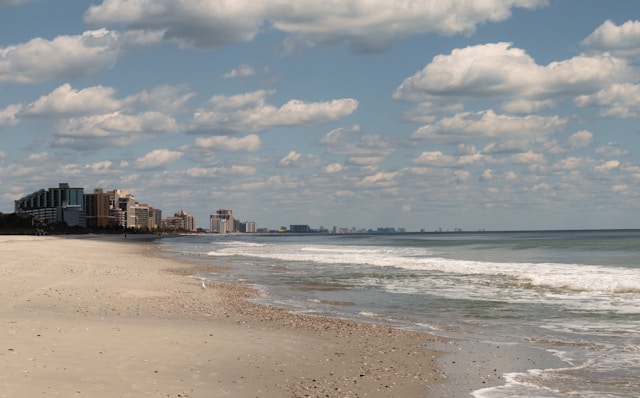
This guide covers the City of Myrtle Beach only. Neighboring markets often confused with Myrtle Beach include:
- North Myrtle Beach: Separate city with its own STR rules and licensing.
- Surfside Beach: Small beach town south of Myrtle Beach, distinct STR regulations.
- Conway: Inland city, Horry County seat, different zoning and STR enforcement.
- Garden City: Unincorporated area with mixed Horry County and local rules.
Legality Verdict
Short-term rentals are legal in Myrtle Beach only in specifically zoned areas, with strict enforcement and a required business license. Most traditional residential neighborhoods prohibit STRs. Key risk: pending state legislation could disrupt platform use.
- Legality Status: 2/5
- License Availability: 4/5
- Compliance Cost (% revenue): 4/5
- Regulatory Stability: 2/5
- Enforcement Climate: 4/5
TL;DR
A short-term rental in Myrtle Beach is any rental under 90 days. A city business license is required, with fees based on gross receipts. The total tax stack is 10% (5% state sales, 2% state accommodations, 3% city accommodations tax). Most residential zones prohibit STRs; only select areas and grandfathered homes qualify. The biggest gotcha: zoning is the binding constraint—most homes are not eligible for STR use.
Quick Facts
| Item | Detail |
|---|---|
| STR Definition | Rental of less than 90 days City of Myrtle Beach |
| Registration Required | Yes (business license) City of Myrtle Beach Planning & Zoning Department |
| Permit Cost | Based on gross receipts; exact fee requires city inquiry [needs verification — call City of Myrtle Beach Business License Division at (843) 918-1200 or https://www.cityofmyrtlebeach.com/departments/business_license_division.php] |
| Annual Renewal | Yes; renewal fee based on gross receipts STR Regulations |
| State Sales Tax | 5% South Carolina Department of Revenue |
| State Accommodations Tax | 2% South Carolina Department of Revenue |
| Local Accommodations Tax | 3% City of Myrtle Beach |
| Total Effective Lodging Tax | 10% (5% state sales + 2% state accommodations + 3% city accommodations) City of Myrtle Beach |
| License Cap | No cap STR Regulations |
| Permitted Zones | Only zones specifically allowing STRs; most residential zones prohibit City of Myrtle Beach |
| Prohibited Zones | Most traditional residential neighborhoods City of Myrtle Beach |
| Grandfathered Properties | Fewer than 30 houses in residential zones City of Myrtle Beach |
| HOA/Condo Override | Yes, HOAs/condos may prohibit STRs FirstService Residential |
| Occupancy Cap | Not codified — no separate city rule identified in sources reviewed City of Myrtle Beach Code of Ordinances |
| Parking Requirement | Not codified — no separate city rule identified in sources reviewed City of Myrtle Beach Code of Ordinances |
| Inspection Requirement | Not codified — no separate city rule identified in sources reviewed City of Myrtle Beach Code of Ordinances |
| Local Contact Requirement | Not codified — no separate city rule identified in sources reviewed City of Myrtle Beach Code of Ordinances |
| Primary Residence Rule | Not codified — no separate city rule identified in sources reviewed City of Myrtle Beach Code of Ordinances |
| Density Limit | Not codified — no separate city rule identified in sources reviewed City of Myrtle Beach Code of Ordinances |
| Transferability | Not transferable; new owner must apply City of Myrtle Beach Business License Division |
| Enforcement Penalties | Up to $500 and/or 30 days per violation STR Regulations |
| Insurance Requirement | $1M commercial general liability required (state law) Home Team Luxury Rentals |
| Last Updated | May 22, 2026 |
Regulatory Impact Snapshot
Underwriters should model compliance costs at 10.0% of gross revenue, with median Myrtle Beach, SC STRs earning $34,922 at an average daily rate of $205 and 54% occupancy.
The binding constraint is zoning: most residential properties are ineligible for STR use, and only select zones or grandfathered homes qualify. The business license fee is based on gross receipts, and the total tax stack is 10%. Pending state legislation could further impact platform use and compliance requirements. Run this market in our Airbnb Calculator →
Top 500 US Airbnb Rental Markets - 2026
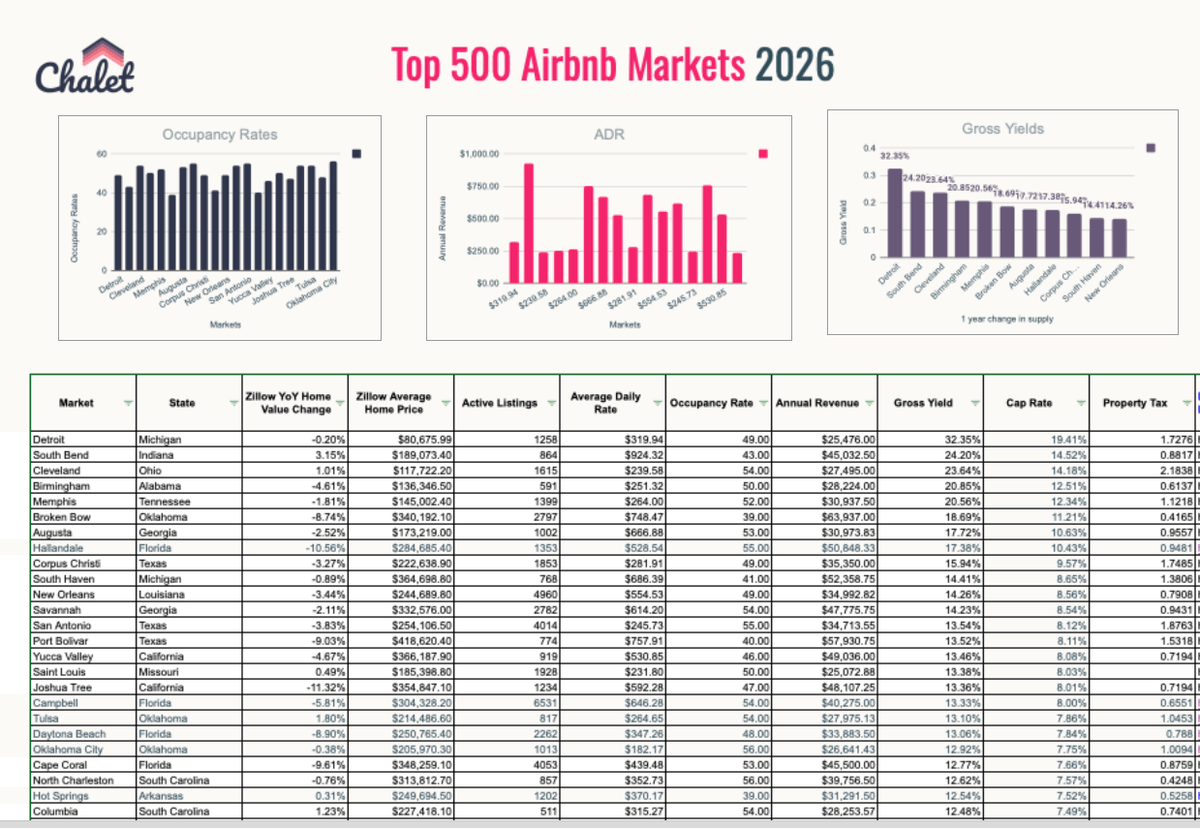
Instantly compare top 500 short-term (Airbnb) rental markets in the US
Frequently Asked Questions
Basics
What is considered a short-term rental in Myrtle Beach?
A short-term rental is any rental of less than 90 days in Myrtle Beach City of Myrtle Beach.
Are short-term rentals legal in Myrtle Beach?
Yes, but only in zones that specifically allow STRs. Most traditional residential neighborhoods prohibit them City of Myrtle Beach.
Can I operate an STR in any Myrtle Beach neighborhood?
No. Most residential neighborhoods are not zoned for STRs. Only certain zones and grandfathered properties qualify City of Myrtle Beach.
Licensing
Is a business license required for STRs in Myrtle Beach?
Yes, a city business license is required to operate a short-term rental City of Myrtle Beach Planning & Zoning Department.
How much does the business license cost?
The fee is based on gross receipts. Exact amounts require contacting the city [needs verification — call City of Myrtle Beach Business License Division at (843) 918-1200 or https://www.cityofmyrtlebeach.com/departments/business_license_division.php].
How long does it take to get a business license?
The process may take up to two weeks by mail, as zoning approval is required City of Myrtle Beach Business License Division.
Is the business license transferable if I sell my property?
No, new owners must apply for a new business license and obtain zoning approval City of Myrtle Beach Business License Division.
Taxes
What taxes apply to STRs in Myrtle Beach?
STRs are subject to 5% state sales tax, 2% state accommodations tax, and 3% city accommodations tax, totaling 10% City of Myrtle Beach.
Does Airbnb collect and remit all required taxes?
Airbnb collects the 5% state sales tax, 2% state accommodations tax, 0.5% city accommodations tax, and 1% hospitality fee. Hosts must remit the remaining 2.5% city accommodations tax Airbnb Help Center.
Do I need a state tax account?
Yes, all STR operators must register for state sales and accommodations tax accounts with the South Carolina Department of Revenue South Carolina Department of Revenue.
Operations
Are there occupancy or parking limits for STRs?
No separate city rules on occupancy or parking for STRs were identified in available sources City of Myrtle Beach Code of Ordinances.
Is an inspection required before renting?
No separate city inspection or life-safety requirement for STRs was identified in available sources City of Myrtle Beach Code of Ordinances.
Can HOAs or condos prohibit STRs?
Yes, HOAs and condo associations can regulate or prohibit STRs through their own rules FirstService Residential.
Is insurance required?
Yes, state law requires a $1 million commercial general liability policy for all STRs Home Team Luxury Rentals.
Enforcement
What are the penalties for illegal STR operation?
Violations can result in fines up to $500 and/or 30 days per occurrence STR Regulations.
How is STR compliance enforced?
The city enforces zoning and licensing rules. Non-compliance can result in fines or license revocation City of Myrtle Beach Planning & Zoning Department.
Are there recent or pending changes to STR laws?
Yes, South Carolina House Bill 3876 is pending and could significantly change STR tax collection and platform use South Carolina Legislature Online.
Will new state laws affect STRs in Myrtle Beach?
If HB 3876 passes, property managers may be barred from listing on platforms like Airbnb and Vrbo, impacting many hosts Newsline Local.
Permit Process
To operate a short-term rental in Myrtle Beach, the property must be in a zone that allows STRs. The business license application requires zoning approval and may take up to two weeks by mail. Fees are based on gross receipts, and licenses must be renewed annually. New owners must reapply for a license and obtain fresh zoning approval City of Myrtle Beach Business License Division.
Zoning
Most traditional residential neighborhoods in Myrtle Beach prohibit short-term rentals. Only properties in specific zones or those grandfathered in (fewer than 30 homes) may operate as STRs. If a property is not already in an STR-permitted zone, it cannot be converted for STR use. Zoning is the primary constraint for investors City of Myrtle Beach.
Taxes and Remittance
STRs in Myrtle Beach are subject to a 5% state sales tax, 2% state accommodations tax, and 3% city accommodations tax, totaling a 10% tax stack. Airbnb collects most but not all required taxes; hosts must remit the remaining city tax. All operators must register for state tax accounts and file returns as required South Carolina Department of Revenue.
Enforcement and Recent Actions
The city enforces STR rules through zoning and business license checks. Violations can result in fines up to $500 and/or 30 days per occurrence. There is no evidence of recent amendments to enforcement ordinances or fine amounts as of May 2026 STR Regulations.
Recent Changes and Pending Legislation
South Carolina has not enacted statewide STR preemption, but House Bill 3876 is pending. If passed, it could restrict property managers from listing on platforms like Airbnb and Vrbo, requiring annual reporting and changing tax collection processes. This presents a significant regulatory risk for Myrtle Beach STR investors South Carolina Legislature Online.
Comparable Markets
- North Myrtle Beach, SC — Consider if you want a nearby market with its own STR rules and more permissive zoning.
- Charleston, SC — Consider for a historic city with a mature STR regulatory framework.
- Hilton Head Island, SC — Consider for a resort market with clear STR licensing and enforcement.
- Savannah, GA — Consider for a coastal city with robust STR demand and defined permitting.
Sources
- City of Myrtle Beach: https://www.cityofmyrtlebeach.com/news_detail_T6_R1468.php
- City of Myrtle Beach Planning & Zoning Department: https://www.cityofmyrtlebeach.com/departments/planning_and_zoning_department.php
- City of Myrtle Beach Business License Division: https://www.cityofmyrtlebeach.com/departments/business_license_division.php
- City of Myrtle Beach (Fillable Hospitality & Local Atax Reporting Form): https://cms6.revize.com/revize/myrtlebeachsc/Fillable%20Hospitality%20&%20Local%20Atax%20Reporting%20Form%20(eff%207.1.19).pdf
- South Carolina Department of Revenue: https://dor.sc.gov/tax/accommodations, https://dor.sc.gov/sales-use-tax-index/accommodations
- STR Regulations (citing City of Myrtle Beach): https://strcityregs.com/south-carolina/myrtle-beach
- Home Team Luxury Rentals (citing SC S.442): https://hometeamluxuryrentals.com/blog/south-carolina-airbnb-laws
- FirstService Residential: https://www.fsresidential.com/south-carolina/news-events/articles/what-are-south-carolina-short-term-rentals/
- Airbnb Help Center: https://www.airbnb.com/help/article/2328
- Southern Dreams Realty: https://southerndreamsrealty.com/str-restrictions-in-south-carolina/
- Avalara MyLodgeTax: https://www.avalara.com/mylodgetax/en/blog/2025/1/myrtle-beach-law-bans-converting-short-term-rentals-to-long-term-rentals-in-key-areas.html
- South Carolina Legislature Online: https://www.scstatehouse.gov/sess125_2023-2024/bills/3253.htm, https://www.scstatehouse.gov/sess126_2025-2026/bills/3876.htm
- Newsline Local: https://www.newslinelocal.com/p/critics-say-sc-bill-would-harm-short
- Reason Foundation Commentary: https://reason.org/commentary/south-carolinas-house-bill-3876-would-hurt-small-short-term-rental-providers/
This page is research, not legal advice. Consult local counsel before acquiring or operating a short-term rental in City of Myrtle Beach, Horry County, South Carolina.
Ready to evaluate Myrtle Beach as an STR market?
- See Myrtle Beach revenue data → — Get live STR performance benchmarks for underwriting.
- Run this deal in our calculator → — Model cash flow, taxes, and compliance costs instantly.
- Match with a Myrtle Beach STR agent → — Connect with local experts for on-the-ground insights.