



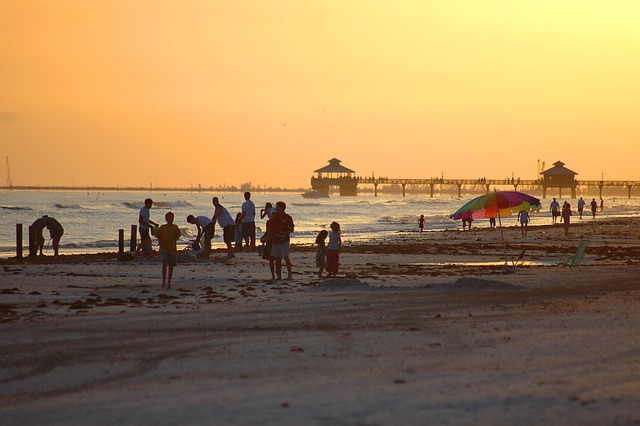
This guide covers the City of Fort Myers, Florida. Nearby markets often confused with Fort Myers in STR regulation research include:
- Fort Myers Beach: A separate municipality with its own strict STR registration and enforcement regime.
- Cape Coral: Distinct city with its own STR licensing and business tax requirements.
- Sanibel: Island city with unique STR restrictions and environmental overlays.
- Bonita Springs: Neighboring city in Lee County with its own STR rules and enforcement.
Legality Verdict
Short-term rentals are legal in Fort Myers, FL, with no city-level ban or cap. State licensing and county tax rules apply, but the city does not add extra restrictions or fees. Enforcement is complaint-driven.
- Legality Status: 4/5
- License Availability: 4/5
- Compliance Cost (% revenue): 4/5
- Regulatory Stability: 4/5
- Enforcement Climate: 5/5
TL;DR
Fort Myers defines STRs per Florida law and requires a state DBPR vacation rental license (from $50, annual renewal). The total effective lodging tax is 11% (6% state, 5% county). No city-level permit, cap, or zoning restriction is codified. The main investor risk is that all enforcement and penalties default to state law, so compliance with DBPR licensing and tax registration is critical. Biggest gotcha: No city permit, but you must still register with both the state and Lee County for tax and business purposes.
Quick Facts
| Item | Detail |
|---|---|
| STR Definition | Florida: rental of a dwelling for periods under 30 days or one calendar month Florida DBPR |
| Registration Required | Yes — Florida DBPR vacation rental license Florida DBPR |
| Permit Cost | $50 application fee + license fee per unit (confirm with DBPR) Florida DBPR |
| Annual Renewal | Yes — annual renewal, same fee as initial license Florida DBPR |
| State Sales Tax | 6% STRSearch |
| County Tourist Tax | 5% Lee County Clerk |
| Local Accommodations Tax | Not codified — no separate city lodging tax Avalara |
| Total Effective Lodging Tax | 11% (state + county) STRSearch, Lee County Clerk |
| Business Tax Receipt | Required from Lee County Tax Collector Lee County Tax Collector |
| License Cap | Not codified — no city-level cap City of Fort Myers |
| Permitted Zones | Not codified — no city zoning restriction identified Municode |
| Occupancy Cap | Not codified — no city occupancy limit Municode |
| Minimum Night Stay | Not codified — no city minimum Municode |
| Parking Requirement | Not codified — no city parking rule Municode |
| Primary Residence Rule | Not codified — no owner-occupancy requirement Municode |
| HOA/Condo Override | Not codified — private covenants may apply Municode |
| Inspection Requirement | Not codified — state/county building/fire codes apply Municode |
| Transferability | Not transferable — new owner must reapply Florida DBPR |
| Enforcement Penalties | Up to $1,000 per offense (state law) Florida DBPR |
| Enforcement Climate | Complaint-driven, no recent city crackdowns City of Fort Myers |
| Last Updated | 2026-05-21 |
Regulatory Impact Snapshot
Underwriters should model compliance costs at 4.0% of gross revenue, with median Fort Myers, FL STRs earning $28,496 at an average daily rate of $170 and 33% occupancy. The binding constraint is the requirement for a Florida DBPR vacation rental license (from $50 plus per-unit fee, annual renewal) and strict compliance with state and county tax registration and remittance. No city-level permit, cap, or operational restriction is codified, but all enforcement defaults to state law. Investors should confirm business tax receipt requirements with Lee County and ensure all licenses are current.
Run this market in our Airbnb Calculator →
Top 500 US Airbnb Rental Markets - 2026
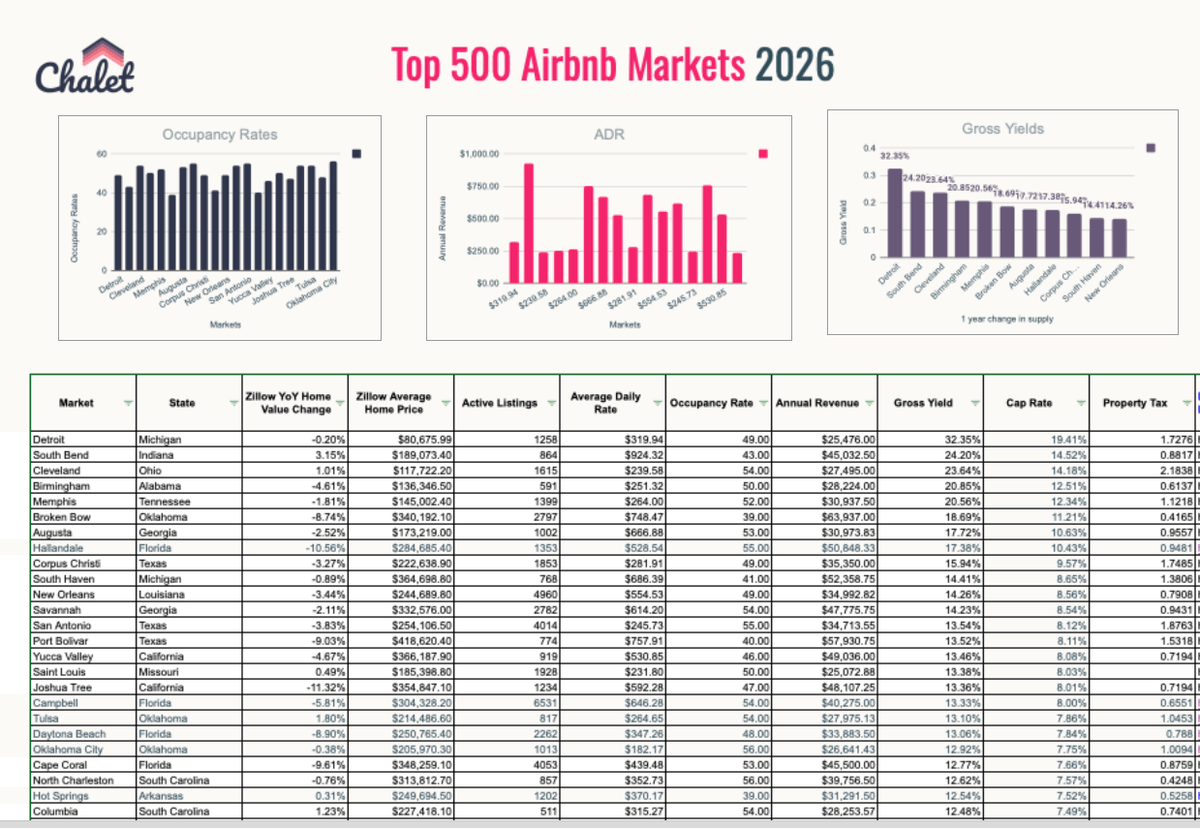
Instantly compare top 500 short-term (Airbnb) rental markets in the US
Frequently Asked Questions
Basics
Is short-term rental (STR) legal in Fort Myers, FL?
Yes, STRs are legal in Fort Myers, subject to state licensing and county tax rules. The city does not ban or cap STRs LegalClarity.
How does Fort Myers define a short-term rental?
A short-term rental is any dwelling rented for periods under 30 days or one calendar month, per Florida law Florida DBPR.
Is Fort Myers the same as Fort Myers Beach for STR rules?
No. Fort Myers Beach is a separate municipality with its own stricter STR regime BuyLakewoodRanch.com.
Licensing
Do I need a city permit to operate an STR in Fort Myers?
No separate city permit is codified; you must obtain a Florida DBPR vacation rental license Florida DBPR.
What is the cost of the Florida DBPR vacation rental license?
$50 application fee plus a per-unit license fee (confirm with DBPR) Florida DBPR.
Is annual renewal required?
Yes, the DBPR license must be renewed annually at the same fee Florida DBPR.
Is the license transferable if I sell my property?
No, licenses are not transferable; new owners must apply Florida DBPR.
Do I need a business tax receipt?
Yes, from the Lee County Tax Collector Lee County Tax Collector.
Taxes
What taxes apply to STRs in Fort Myers?
6% Florida state sales tax and 5% Lee County Tourist Development Tax apply STRSearch, Lee County Clerk.
Does Fort Myers have a local accommodations tax?
No, only state and county lodging taxes apply Avalara.
Does Airbnb collect and remit taxes for me?
Yes, Airbnb collects and remits both the 6% state and 5% county taxes for bookings in Fort Myers Airbnb.
Do I need to register for a sales tax certificate?
Yes, with the Florida Department of Revenue before collecting taxes STRSearch.
Operations
Are there zoning restrictions for STRs in Fort Myers?
No separate city zoning restrictions for STRs are codified Municode.
Is there a minimum night stay or occupancy cap?
No, neither is codified in city ordinances Municode.
Are there parking or local contact requirements?
No city-level requirements are codified Municode.
Do HOA or condo rules override city law?
Yes, private covenants may restrict STRs even if the city does not Municode.
Enforcement
Who enforces STR rules in Fort Myers?
Enforcement is primarily complaint-driven by city code enforcement and the Florida DBPR City of Fort Myers, LegalClarity.
What are the penalties for operating without a license?
Up to $1,000 per offense under Florida law Florida DBPR.
Are there recent crackdowns or moratoriums?
No recent city-level crackdowns or moratoriums are reported as of May 2026 City of Fort Myers.
What must be included in my STR listing?
Your DBPR license number, sales tax registration, and tourist tax account number must be displayed; platforms must verify these LegalClarity.
Permit Process
Operating a short-term rental in Fort Myers requires a Florida Department of Business and Professional Regulation (DBPR) vacation rental license. The city does not have a separate STR permit or registration process, so all licensing is handled at the state level. The DBPR license application involves a $50 processing fee plus a per-unit license fee, which must be renewed annually at the same rate. The license is not transferable; if the property changes ownership, the new owner must apply for a new license. In addition to the state license, hosts must obtain a business tax receipt from the Lee County Tax Collector. There is no city-level cap on the number of STR licenses, and no city-specific application or renewal process is codified. All enforcement and penalties for unlicensed operation default to state law, with fines up to $1,000 per offense Florida DBPR, Lee County Tax Collector.
Zoning
The City of Fort Myers does not separately codify which zoning districts permit or prohibit short-term rentals in its ordinances or land use regulations. No city-level restrictions on STRs by zone, minimum night stay, occupancy cap, or parking requirement are identified in the available primary sources. This means that, unless a property is subject to private HOA or condo covenants, STRs are generally permitted throughout the city by default. However, investors should be aware that private associations may impose their own restrictions, which are not enforced by city code but are legally binding on owners. The absence of city zoning or operational constraints makes Fort Myers relatively permissive for STR investors, but due diligence on private deed restrictions remains essential Municode.
Taxes and Remittance
Short-term rentals in Fort Myers are subject to a combined 11% lodging tax: 6% Florida state sales tax and 5% Lee County Tourist Development Tax. The city does not impose any additional accommodations or hospitality tax. Hosts must register with the Florida Department of Revenue for a sales tax certificate before collecting taxes. Airbnb and similar platforms collect and remit both the state and county lodging taxes for bookings made through their sites, but hosts are responsible for ensuring compliance for direct bookings and for any discretionary surtax that may apply. A business tax receipt from Lee County is also required. Failure to comply with tax registration and remittance can result in penalties or loss of license STRSearch, Lee County Clerk, Airbnb.
Enforcement and Recent Actions
Enforcement of STR rules in Fort Myers is primarily complaint-driven, with residents able to report violations through the city’s “Report A Concern” portal or by contacting Code Enforcement. The city does not publish a separate STR fine schedule or recent enforcement actions; all penalties for unlicensed operation or noncompliance default to Florida state law, which allows fines up to $1,000 per offense and possible suspension or revocation of the right to operate. There have been no recent city-level crackdowns, moratoriums, or amendments to STR enforcement codes as of May 2026. Platforms are required to verify license and tax numbers before publishing listings, and hosts must display these numbers in all advertisements City of Fort Myers, LegalClarity.
Recent Changes and Pending Legislation
In June 2024, Florida Governor Ron DeSantis vetoed Senate Bill 280, which would have imposed a statewide STR registry and expanded state preemption over local STR regulation. As a result, the existing framework remains in place for 2026: local governments like Fort Myers retain authority over registration, zoning, and enforcement, but cannot ban STRs outright or regulate their frequency or duration unless such ordinances predate June 1, 2011. No recent amendments or new city-level STR ordinances have been published in Fort Myers. Investors should monitor for future state legislative changes, but the current regulatory environment is stable and permissive for STR operations Avantio, LegalClarity.
Comparable Markets
- Cape Coral, FL — Consider if you want a nearby city with its own STR licensing and business tax requirements.
- Fort Myers Beach, FL — Consider if you need a market with stricter STR registration and enforcement.
- Sanibel, FL — Consider if you want an island market with unique STR restrictions and overlays.
Sources
- Florida Department of Business and Professional Regulation (DBPR)
- Lee County Tax Collector
- Lee County Clerk of Court, FL (Tourist Development Tax)
- City of Fort Myers, FL – Official Website
- Code of Ordinances | Fort Myers, FL | Municode Library
- Chapter 118 – LAND USE REGULATIONS | Fort Myers, FL
- Florida Short Term Rental Taxes: A Complete Guide
- Florida Short-Term Rental Laws: Licensing, Taxes & Penalties – LegalClarity
- 2026 Fort Myers, Florida Sales Tax Calculator & Rate | Avalara
- Airbnb Help Center: Occupancy tax collection and remittance by Airbnb in Florida
- Florida Short-Term Rental Laws 2026: What Property Managers Need to Know – Avantio
- The Best Rental Markets in Southwest Florida – BuyLakewoodRanch.com
This page is research, not legal advice. Consult local counsel before acquiring or operating a short-term rental in City of Fort Myers, Lee County, Florida.
Ready to evaluate Fort Myers as an STR market?
- See Fort Myers revenue data → — Get live median revenue, ADR, and occupancy for Fort Myers STRs.
- Run this deal in our calculator → — Model cash flow and compliance costs for your Fort Myers property.
- Match with a Fort Myers STR agent → — Connect with a local expert for STR acquisitions and setup.