Airbnb Market Analytics & Investment Insights
Chalet Research Team
Panama City Beach, FL — Market Intelligence Report
Researched by Chalet's Senior STR Analysts · Verified with local Panama City Beach market partners
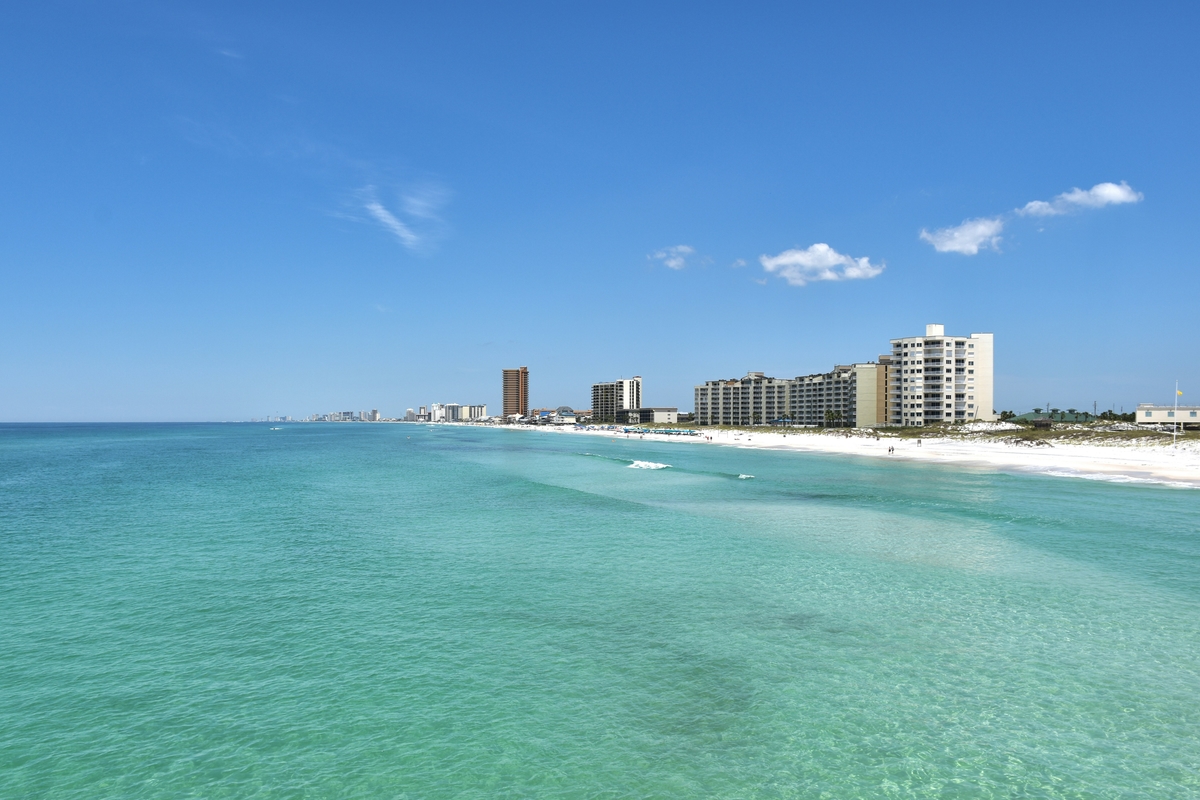
Panama City Beach is the Florida Panhandle's volume summer beach market — 27 miles of white Gulf sand drawing 15 million visitors annually from Atlanta, Nashville, and Birmingham who drive six hours and arrive in concentrated waves from Memorial Day through Labor Day. Chalet data shows 6,146 full-time listings generating $43,977 in average annual revenue at 50% occupancy and a $242 ADR, for a 10.67% gross yield against a $412,088 median home value — ranked #54 nationally. July alone reaches 79% occupancy and $331 ADR, generating $8,457 in a single month; December drops to 25% occupancy and $1,818. This extreme seasonal concentration is the defining investment characteristic of PCB: four months of high-intensity income require six months of careful shoulder management and two genuine winter months that test cash-flow models. Florida's state preemption law prevents municipalities from banning compliant STRs, and Bay County operates one of the Panhandle's most permissive STR frameworks. Full compliance details are in the Panama City Beach STR regulations guide.
The 2-bedroom condo is PCB's defining product — 3,719 listings comprising 61% of total market supply, generating $42,803 annually at $251 ADR. This unit type reflects the resort condo development pattern that shaped the PCB coastline from the 1970s through 2010s, and it remains the primary entry vehicle for most investors. The sweet spot for yield is the Gulf-view 2BR in the $300,000–$380,000 range (zip 32413 or premium 32407 locations), where proximity to the beach's premium demand without direct-beachfront pricing produces 10–12% gross yields. For investors willing to size up, 4-bedroom properties generate $71,798 annually at $406 ADR and 48% occupancy — a structure suited to large family groups who book earlier and stay longer than couples. The West End corridor (32413), adjacent to the upscale 30A market, offers proximity to that higher-ADR demand without 30A's entry prices. A Chalet agent familiar with the difference between the 32407 condo corridor and the 32413 house market can identify which properties are structurally positioned to outperform.
The demand case at scale is straightforward: the Southeast's 50-million-person population within a six-hour drive is the most reliable vacation beach market in America. Tyndall Air Force Base — rebuilt after Hurricane Michael and now fully operational — adds year-round military visitor demand that partially floors the winter trough. Spring break from Alabama, Georgia, and Tennessee universities runs March through mid-April. And average booking lead time of 69 days signals that early-window pricing captures meaningful value from planners who commit in advance. The Chalet ROI calculator models the seasonal revenue profile at specific bedroom counts and price points.
The risks are real and concentrated. Florida's property insurance crisis has increased wind and flood coverage costs by 40–80% since 2020 — a well-located 2BR condo now typically carries $3,500–$6,000 in combined annual insurance premiums, a line item that can consume 8–14% of gross revenue before management fees even appear. Florida SB 4-D (2022) requires condo associations with three or more floors to fully fund structural reserves, and many older PCB buildings face HOA fee increases of 30–100% to comply — pre-acquisition financial review of building reserves is now mandatory due diligence, not optional. Home values are down 6.69% year-over-year, the deepest correction of any Florida market studied, which improves entry yields but introduces near-term equity uncertainty. Professional management concentration is significant: Panhandle Rentals (549 listings), RealJoy (432), and their peers hold roughly 36% of total supply and set quality standards that solo operators must meet.
Panama City Beach is the Southeast's summer beach income machine — a 10.67% gross yield market where 79% July occupancy rewards investors who underwrite the winter trough honestly, model rising insurance costs precisely, and scrutinize condo reserve requirements before closing, because in PCB the difference between a good deal and a cash-flow trap often comes down to the HOA financials, not the nightly rate.
| 2 |
| 32413 |
| 9% |
| $41,952 |
| 3,773 |
| $459K |