



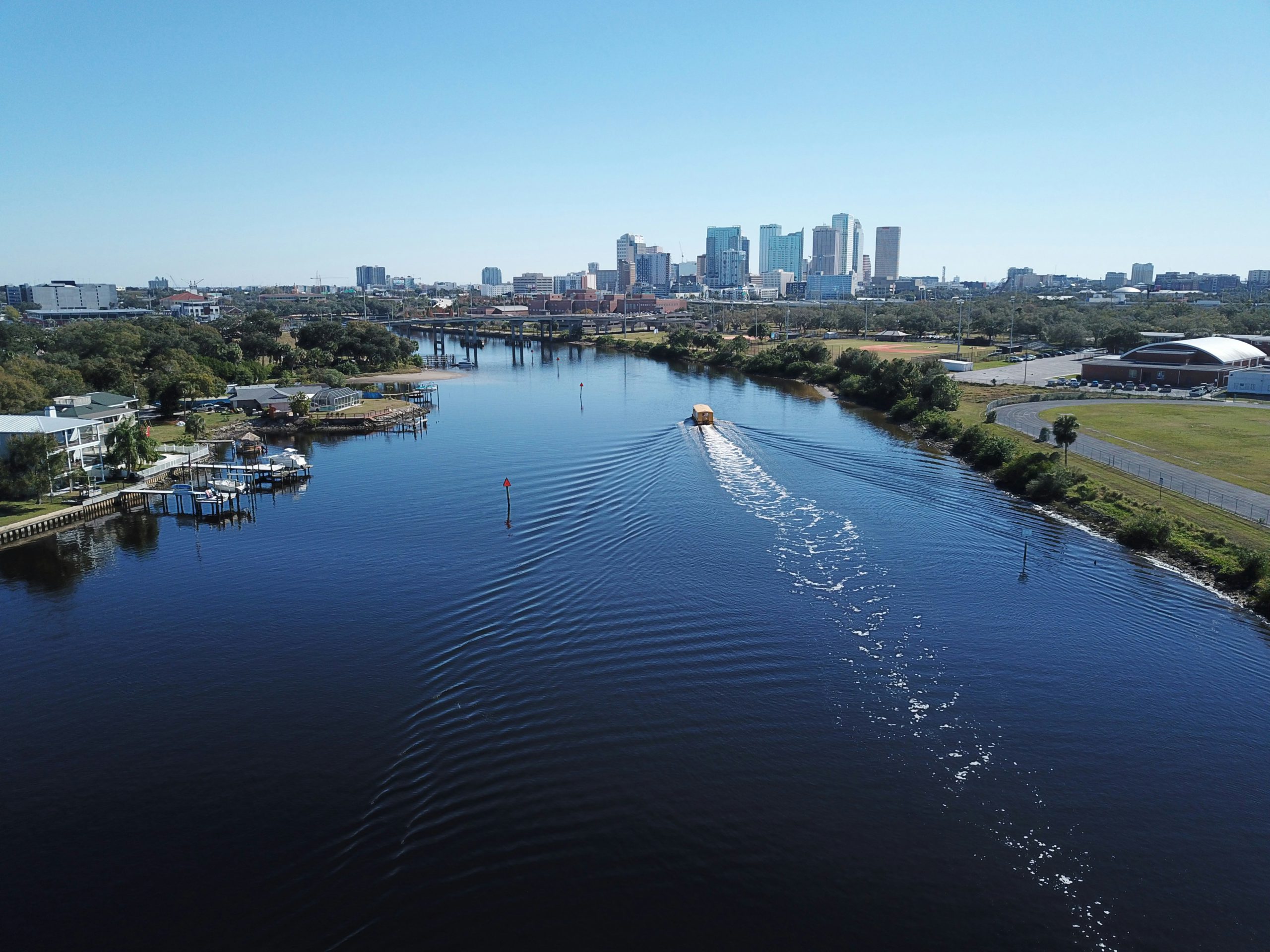
This guide covers Tampa, Florida only. If you are researching STR rules, be aware that these nearby markets have separate regulations:
- St. Petersburg: Major city in Pinellas County with its own STR zoning and licensing rules.
- Clearwater: Popular beach destination with distinct STR restrictions and enforcement.
- Brandon: Unincorporated suburban area east of Tampa, governed by Hillsborough County rules.
- Temple Terrace: Incorporated city adjacent to Tampa with its own municipal code.
Legality Verdict
Short-term rentals are legal in Tampa, but only with strict licensing and zoning compliance. Both city and state permits are required, and enforcement is active. The biggest risk is operating in a prohibited zone or without full licensing.
- Legality Status: 3/5
- License Availability: 4/5
- Compliance Cost (% revenue): 3/5
- Regulatory Stability: 4/5
- Enforcement Climate: 3/5
TL;DR
Tampa defines STRs as rentals of 182 days or less. Operators must secure a Florida DBPR vacation rental license and a City of Tampa Business Tax Receipt. The total lodging tax is 12% (6% state, 6% county). STRs are generally allowed only in commercial/mixed-use zones; most single-family residential areas are restricted. The primary investor risk is non-compliance with zoning or licensing, which can trigger fines up to $5,000 per violation. The single biggest gotcha: Tampa does not codify many STR-specific rules, but enforcement is strict and multi-layered.
Quick Facts
| Item | Detail |
|---|---|
| STR Definition | Rental of 182 days or less (Airbnb Help Center) |
| Registration Required | Yes — City BTR, State DBPR license, County BTR (Tampa, FL Business License Guide) |
| Permit Cost | State DBPR: $50 application + $10 education fee + annual license fee (varies by unit type/number) (DBPR Form HR 5025-753); City/County BTR: [needs verification — call City of Tampa Business Tax Division at (813) 274-8751] |
| Annual Renewal | Yes — State DBPR and City/County BTRs must be renewed annually (DBPR Form HR 5025-753) |
| State Sales Tax | 6% (Airbnb Help Center) |
| County Tourist Development Tax | 6% (Hillsborough County Tax Collector) |
| Local Accommodations Tax | Not codified — no separate city lodging tax (Hillsborough County Tax Collector) |
| Total Effective Lodging Tax | 12% (6% state + 6% county) (Airbnb Help Center) |
| Occupancy Cap | Not codified — Florida Building Code applies ([Code of Ordinances |
| Minimum Night Stay | Not codified — no city rule ([Code of Ordinances |
| Parking Requirement | Not codified — no city rule ([Code of Ordinances |
| Primary Residence Rule | Not codified — no city rule ([Code of Ordinances |
| Density Limits | Not codified — no city rule ([Code of Ordinances |
| Inspection Requirement | Not codified — Florida Building Code and fire safety apply ([Code of Ordinances |
| HOA/Condo Override | Not codified — private covenants may apply ([Code of Ordinances |
| Permitted Zones | Commercial and mixed-use districts (Vello); [needs verification — call City of Tampa Planning & Zoning at (813) 274-3100] |
| Prohibited Zones | Most single-family residential zones (Vello); [needs verification — call City of Tampa Planning & Zoning at (813) 274-3100] |
| License Cap | Not codified — no city cap ([Code of Ordinances |
| Transferability | Not codified — [needs verification — call City of Tampa Business Tax Division at (813) 274-8751] |
| Enforcement Penalties | $500–$5,000 per violation (state DBPR) (Property Leads Florida) |
| Primary Regulator | City of Tampa Business Tax Division, FL DBPR, Hillsborough County Tax Collector (Tampa, FL Business License Guide) |
| Last Updated | 2026-05-21 |
Regulatory Impact Snapshot
Underwriters should model compliance costs at 12.2% of gross revenue, with median Tampa, FL STRs earning $31,886 at an average daily rate of $162 and 54% occupancy. The compliance stack includes a 12% lodging tax (6% state, 6% county) and state/local licensing fees. The binding constraint is zoning: STRs are generally limited to commercial and mixed-use districts, with most single-family residential areas off-limits. Failure to comply with licensing or zoning can result in fines up to $5,000 per violation. Run this market in our Airbnb Calculator →
Top 500 US Airbnb Rental Markets - 2026
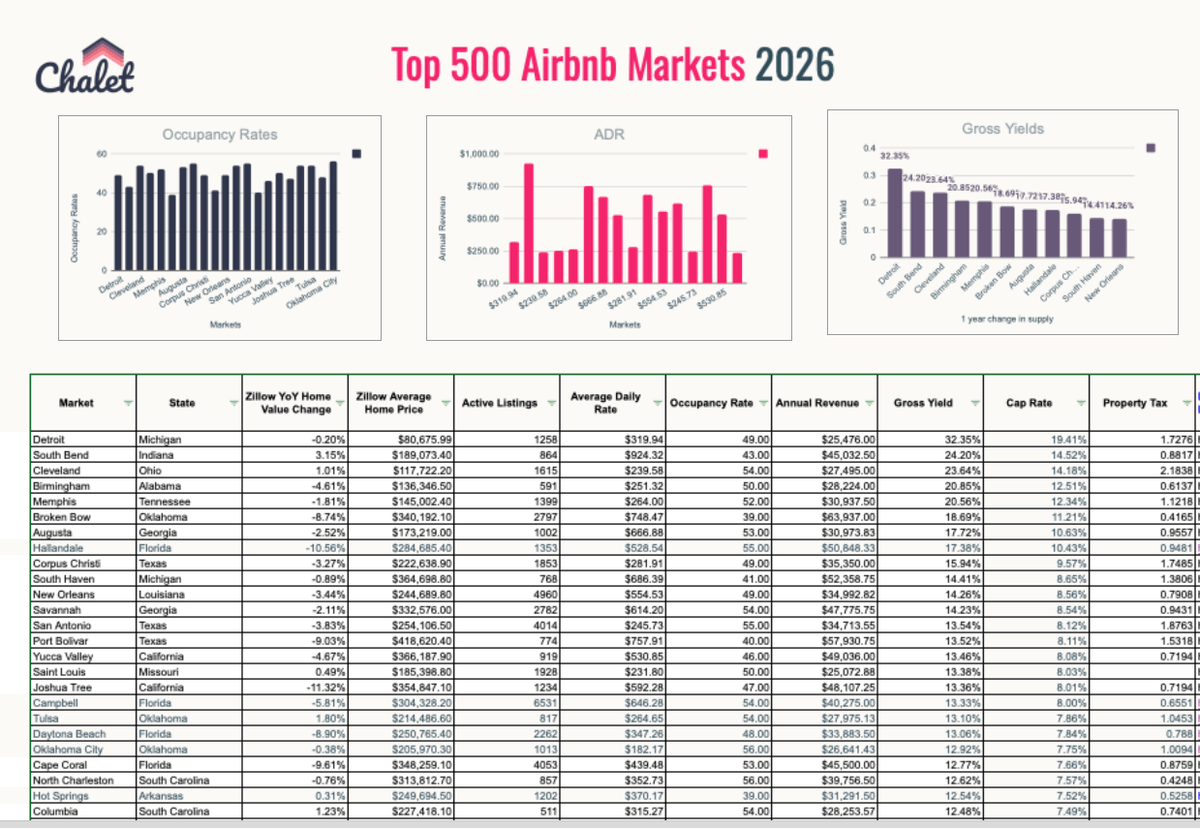
Instantly compare top 500 short-term (Airbnb) rental markets in the US
Frequently Asked Questions
Basics
What is considered a short-term rental in Tampa?
A short-term rental is defined as a rental of 182 days or less in Tampa (Airbnb Help Center).
Are short-term rentals legal in Tampa?
Yes, STRs are legal if you comply with all licensing, zoning, and tax requirements (Copeland Morgan LLC).
Does Tampa have a citywide ban or moratorium on STRs?
No, but STRs are generally restricted to commercial and mixed-use zones (Vello).
Licensing
What licenses are required to operate an STR in Tampa?
You need a Florida DBPR vacation rental license, a City of Tampa Business Tax Receipt, and a Hillsborough County Local Business Tax Receipt (Tampa, FL Business License Guide).
How much does the state vacation rental license cost?
The DBPR license requires a $50 application fee, $10 education fee, and an annual license fee based on unit type/number (DBPR Form HR 5025-753).
Is there a cap on STR licenses in Tampa?
No citywide cap is codified (Code of Ordinances | Tampa, FL – Municode Library).
Are STR permits transferable?
Not codified — [needs verification — call City of Tampa Business Tax Division at (813) 274-8751].
Taxes
What is the total lodging tax rate for STRs in Tampa?
The total effective lodging tax is 12% (6% state, 6% county) (Airbnb Help Center).
Does Airbnb collect and remit taxes for Tampa hosts?
Yes, Airbnb collects and remits both state and county taxes for Tampa bookings (Airbnb Help Center).
Do I need to register for a sales tax certificate?
Yes, all hosts must register with the Florida Department of Revenue for a sales tax certificate (Avalara MyLodgeTax).
Do I need to remit taxes for VRBO or direct bookings?
Yes, hosts must collect and remit all applicable taxes for VRBO and direct bookings (LuxeHaus Stays).
Operations
Are there occupancy or parking limits for STRs in Tampa?
No separate city rules; Florida Building Code and general parking standards apply (Code of Ordinances | Tampa, FL – Municode Library).
Is there a minimum night stay requirement?
No, Tampa does not codify a minimum night stay (Code of Ordinances | Tampa, FL – Municode Library).
Can I operate an STR in a single-family residential zone?
Generally, no. STRs are restricted in most single-family residential zones (Vello).
Do HOA or condo rules override city STR rules?
Yes, private covenants may further restrict STRs even if city law allows them (Code of Ordinances | Tampa, FL – Municode Library).
Enforcement
What are the penalties for operating without a license?
Fines range from $500 to $5,000 per violation under state law (Property Leads Florida).
How is STR enforcement handled in Tampa?
Enforcement is stringent, with monitoring for compliance and substantial fines for violations (Steadily).
Has Tampa changed its STR rules recently?
No major amendments since 2024; the city continues under the prior framework (Avantio).
Permit Process
Operating a short-term rental in Tampa requires compliance with both state and local licensing regimes. All STR operators must obtain a Florida Department of Business and Professional Regulation (DBPR) vacation rental license, which involves a $50 application fee, a $10 education fee, and an annual license fee that varies by the number and type of units. This license must be renewed annually. In addition, the City of Tampa requires a Business Tax Receipt (BTR) for any business activity, including STRs, and Hillsborough County imposes its own Local Business Tax Receipt requirement. The city BTR is issued by the Business Tax Division under Chapter 24 of the Tampa Code, but it does not substitute for zoning approval or other permits. Operators must ensure their property is in a permitted zone and obtain all necessary approvals before listing. Contact the City of Tampa Business Tax Division for current fee schedules and application procedures (Tampa, FL Business License Guide; DBPR Form HR 5025-753).
Zoning
Zoning is the primary constraint for STR investors in Tampa. The city generally permits short-term rentals in commercial and mixed-use zoning districts, while most single-family residential zones prohibit them. The Tampa zoning code does not explicitly list STRs as a permitted or prohibited use in residential districts, so property owners must verify eligibility with the City of Tampa Planning & Zoning office before operating. Failure to comply with zoning can result in significant fines and forced cessation of rental activity. There are no codified citywide density limits, occupancy caps, or minimum night stay requirements for STRs; instead, Florida Building Code and general city standards apply. HOA and condo association rules may further restrict or prohibit STRs, regardless of city law. Always confirm zoning and private covenants before acquisition (Vello; Code of Ordinances | Tampa, FL – Municode Library).
Taxes and Remittance
Tampa STR operators face a combined lodging tax burden of 12%, consisting of a 6% Florida state sales tax and a 6% Hillsborough County Tourist Development Tax (TDT). The city does not impose a separate accommodations or hospitality tax. Airbnb collects and remits both state and county taxes for Tampa bookings, so hosts do not need to remit these taxes manually for Airbnb reservations. However, for VRBO and direct bookings, hosts are responsible for collecting and remitting all applicable taxes themselves. All operators must register with the Florida Department of Revenue to obtain a sales tax certificate before collecting rental income. Compliance with tax obligations is strictly enforced, and failure to remit taxes can result in substantial penalties (Airbnb Help Center; Hillsborough County Tax Collector; Avalara MyLodgeTax).
Enforcement and Recent Actions
Tampa maintains a stringent enforcement posture for short-term rentals, with active monitoring for compliance with zoning, licensing, and tax requirements. The city does not separately codify STR-specific fine amounts, but Florida state law authorizes fines of $500 to $5,000 per violation for operating without a DBPR license. Local enforcement focuses on discouraging illegal rental activity, and operators found in violation may face substantial penalties and forced cessation of operations. There is no evidence of recent citywide crackdowns, but the regulatory climate remains vigilant. The key risk for investors is non-compliance with zoning or licensing, as enforcement actions can be swift and costly (Property Leads Florida; Steadily).
Recent Changes and Pending Legislation
The regulatory framework for STRs in Tampa has remained stable since 2024. A major state bill (SB 280) that would have centralized vacation rental regulation under the DBPR and limited local government authority was vetoed in June 2024. As a result, Tampa continues to operate under the previous system, with strong local control over zoning, registration, and operational rules. The key regulatory risk for 2026 is the potential for renewed state legislative efforts to preempt local STR regulation, but as of May 2026, no such changes are pending. Investors should monitor state legislative developments, as future preemption could alter the compliance landscape (Avantio; StaySTRA.com).
Comparable Markets
- St. Petersburg, FL — Consider if you want a Pinellas County beach market with its own STR zoning.
- Orlando, FL — Consider for high tourism volume and more permissive STR zoning.
- Miami, FL — Consider for urban STRs with complex but well-defined rules.
- Clearwater, FL — Consider for Gulf Coast beach access and distinct STR restrictions.
Sources
- Florida Department of Business and Professional Regulation (DBPR) — https://www2.myfloridalicense.com/hr/forms/documents/5025_753.pdf
- Hillsborough County Tax Collector — https://www.hillstaxfl.gov/other-services/tourist-development/general-information/
- Tampa Bay Times — https://www.tampabay.com/news/politics/hillsborough-county-set-to-raise-hotel-tax-20190417/
- Code of Ordinances | Tampa, FL – Municode Library — https://library.municode.com/fl/tampa/codes/code_of_ordinances
- Tampa, FL Business License Guide — https://businesslicenseguide.com/tampa-fl-business-license-guide/
- Airbnb Help Center — https://www.airbnb.com/help/article/2301, https://www.airbnb.com/help/article/3346
- Copeland Morgan LLC — https://copelandmorgan.com/str/
- Vello — https://stayvello.com/a-guide-to-floridas-str-tax-and-licensing-requirements-for-tampa-st-pete-clearwater/
- Avantio — https://www.avantio.com/blog/florida-vacation-rental-laws/
- Property Leads Florida — https://propertyleadsflorida.com/florida-short-term-rental-laws-2026/
- StaySTRA.com — https://staystra.com/florida-str-laws-2026-preemption-framework-investor-guide/
- LuxeHaus Stays — https://www.luxehausstays.com/insights/florida-tourist-development-tax/
- Avalara MyLodgeTax — https://www.avalara.com/mylodgetax/en/resources/vacation-rental-tax-guides/florida.html
- Steadily — https://www.steadily.com/blog/airbnb-short-term-rental-laws-regulations-tampa Last updated: 2026-05-21. Reviewed by Ashley Durmo, President, Chalet.
This page is research, not legal advice. Consult local counsel before acquiring or operating a short-term rental in City of Tampa, Hillsborough County, Florida.
Ready to evaluate Tampa as an STR market?
- See Tampa revenue data → — Get live median revenue, ADR, and occupancy for Tampa STRs.
- Run this deal in our calculator → — Model cash flow and compliance costs for any Tampa property.
- Match with a Tampa STR agent → — Connect with a local expert for STR acquisitions.